

Usually the holiday season is an endless list of tasks and errands. Christmas Eve is usually at our house and then Christmas Day many times too. I just finished all my “deliveries” of neighbor’s and friend’s plate goodies, prepped the marinade for the prime rib and prepped tomorrow morning’s breakfast bake.
The last several years of the holiday season have been quiet, many times, too quiet! This year will also be quiet, but has been busy leading up to tonight and tomorrow and Santa will still be making his rounds for so many little ones later tonight.

I’ve always wondered where Santa Claus came from. So, I decided to do a history tutorial this year. Last month when I wrote my list of BLOGMAS and chose the days and what I would write about on those days I had no idea how much of a coincidence this would be. The eerie part you’ll see part way through this post. I did some research on St. Nick and struck gold with history.com.
Santa Claus also known as Saint Nicholas or Kris Kringle has a long history steeped in Christmas tradition. These days Santa Claus is thought of mainly as the jolly man in a red suit who brings toys to good girls and boys on Christmas Eve, but his story stretches all the way back to the 3rd century, when Saint Nicholas walked the earth and became the patron saint of children.
The legend of Santa Claus can be traced back hundreds of years to a monk named St. Nicholas. It is believed that Nicholas was born sometime around A.D. 280 in Patara, near Myra in modern-day Turkey. Much admired for his piety and kindness, St. Nicholas became the subject of many legends. It is said that he gave away all of his inherited wealth and traveled the countryside helping the poor and sick.
Nicholas’s popularity spread over the years and he became known as the protector of children and sailors. His feast day is celebrated on the anniversary of his death, December 6. Traditionally this was considered a lucky day to make large purchases or to get married.
By the Renaissance, St. Nicholas was the most popular saint in Europe. Even after the Reformation, when the veneration of saints began to be discouraged, St. Nicholas maintained a positive reputation, especially in Holland.
St. Nicholas first became popular in American culture towards the end of the 18th century. In December 1773, and again in 1774, a New York newspaper reported that groups of Dutch families had gathered to honor the anniversary of his death.
The name Santa Claus evolved from Nick’s Dutch nickname, Sinter Klaas, a shortened form of Sint Nikolaas (Dutch for Saint Nicholas).
In 1804, John Pintard, a member of the New York Historical Society, distributed woodcuts of St. Nicholas at the society’s annual meeting. The background of the engraving contained the now familiar Santa images including stockings filled with toys and fruit hung over a fireplace.
In 1809, Washington Irving helped to popularize the Sinter Klaas stories when he referred to St. Nicholas as the patron saint of New York in his book, The History of New York. As his prominence grew, Sinter Klaas was described as everything from a “rascal” with a blue three-cornered hat, red waistcoat, and yellow stockings to a man wearing a broad-brimmed hat and a “huge pair of Flemish trunk hose.”
Gift-giving centered mainly around children and has been an important part of the Christmas celebration since the early 19th century. Stores began to advertise Christmas shopping in 1820, and by the 1840s, newspapers were creating separate sections for holiday advertisements, which often featured images of the newly-popular Santa Claus.
In 1841, thousands of children visited a Philadelphia shop to see a life-size Santa Claus model. It was only a matter of time before stores began to attract children, and their parents, with the lure of a peek at a “live” Santa Claus.

Did you know that the Salvation Army has been sending Santa Claus-clad donation collectors into the streets since the 1890s? In the early 1890s, the Salvation Army needed money to pay for the free Christmas meals they provided to needy families. They began dressing up unemployed men in Santa Claus suits and sending them into the streets of New York to solicit donations. Those familiar Salvation Army Santas have been ringing bells on the street corners of American cities ever since.
Perhaps the most iconic department store Santa is Kris Kringle in the 1947 classic Santa Claus movie “Miracle on 34 Street.” A little girl (Natalie Wood) who believes Kris Kringle when he says he is the real Santa Claus (Edwin Green). “Miracle on 34 Street” was remade in 1994 and starred Lord Richard Attenborough and Mara Wilson and both versions are wonderful! Both feature the Macy’s Santa and the Macy’s Thanksgiving Day parade which began in 1924. Fans of all ages still line up to meet the Macy’s Santa in New York City and at stores around the country, where children can take pictures on Santa’s lap and tell him what they want for Christmas.
In 1822, Clement Clarke Moore, an Episcopal minister, wrote a long Christmas poem for his three daughters entitled “An Account of a Visit from St. Nicholas,” more popularly known as “‘Twas The Night Before Christmas.”
Moore’s poem, which he was initially hesitant to publish due to the frivolous nature of its subject, is largely responsible for our modern image of Santa Claus as a “right jolly old elf” with a portly figure and the supernatural ability to ascend a chimney with a mere nod of his head! Although some of Moore’s imagery was probably borrowed from other sources, his poem helped popularize the now-familiar image of a Santa Claus who flew from house to house on Christmas Eve in “a miniature sleigh” led by eight flying reindeer to leave presents for deserving children. “An Account of a Visit from St. Nicholas” created a new and immediately popular American icon.
In 1881, political cartoonist Thomas Nast drew on Moore’s poem to create the first likeness that matches our modern image of Santa Claus. His cartoon, which appeared in Harper’s Weekly, depicted Santa as a rotund, cheerful man with a full, white beard, holding a sack laden with toys for lucky children. It is Nast who gave Santa his bright red suit trimmed with white fur, North Pole workshop, elves and his wife, Mrs. Claus
Eighteenth-century America’s Santa Claus was not the only St. Nicholas-inspired gift-giver to make an appearance at Christmastime. There are similar figures and traditions around the world.
Christkind (Christ Child is an angel-like figure often accompanied by St. Nicholas on his holiday missions) or Kris Kringle believed to deliver presents to well-behaved Swiss and German children. In Scandinavia, a jolly elf named Jultomten was thought to deliver gifts in a sleigh drawn by goats. English legend explains that Father Christmas visits each home on Christmas Eve to fill children’s stockings with holiday treats. Père Noël is responsible for filling the shoes of French children. In Italy, there is a story of a woman called La Befana, a kindly witch who rides a broomstick down the chimneys of Italian homes to deliver toys into the stockings of lucky children.
But here in the United States, Santa Claus is often depicted as flying from his home to home on Christmas Eve to deliver toys to children. He flies on his magic sleigh led by his reindeer: Dasher, Dancer, Prancer, Vixen, Comet, Cupid, Donner, Blitzen, and the most famous reindeer of all, Rudolph. Santa enters each home through the chimney, which is why empty Christmas stockings—once empty socks, now often dedicated stockings made for the occasion—are “hung by the Chimney with care, in hopes that St. Nicholas soon would be there,” just as the famous poem dictastes. Stockings can be filled with candy canes and other treats or small toys.
Santa Claus and Mrs. Claus call the North Pole home, and children write many, many letters to Santa Clause telling of their wishes for under the tree on Christmas morning. They also check his progress via NORAD as he travels the globe delivering toys. Many a cookie and glass a milk is left by the tree and fireplace for Santa Clause as well as carrots for his reindeer on Christmas Eve.
Santa Claus keeps a “naughty and nice list” to determine who deserves gifts on Christmas morning, and parents often invoke these lists as a way to ensure their children are on their best behavior. These lists have been immortalized by the 1934 Christmas song “Santa Claus is coming to Town”:
“He’s making a list
And checking it twice,
Gonna find out Who’s naughty and nice
.
Santa Claus is coming to town.
He sees you when you’re sleeping.
He knows when you’re awake.
He knows if you’ve been bad or good.
So be good for goodness sake!”
Rudolph, “the most famous reindeer of all,” was born over 100 years after his eight flying counterparts. The red-nosed wonder was the creation of Robert L. May, a copywriter at the Montgomery Ward department store.
In 1939, May wrote a Christmas-themed story-poem to help bring holiday traffic into his store. Using a similar rhyme pattern to Moore’s “‘Twas the Night Before Christmas,” May told the story of Rudolph, a young reindeer who was teased by the other deer because of his large, glowing, red nose. But, When Christmas Eve turned foggy and Santa worried that he wouldn’t be able to deliver gifts that night, the former outcast saved Christmas by leading the sleigh by the light of his red nose. Rudolph’s message—that given the opportunity, a liability can be turned into an asset—proved popular.
Montgomery Ward sold almost two and a half million copies of the story in 1939. When it was reissued in 1946, the book sold over three and half million copies. Several years later, one of May’s friends, Johnny Marks, wrote a short song based on Rudolph’s story (1949). It was recorded by Gene Autry and sold over two million copies. Since then, the story has been translated into 25 languages and been made into a television movie, narrated by Burl Ives, which has charmed audiences every year since 1964.


Merry Christmas everyone!
We’re on winter storm watch here (like always  at this time of year) and just like so much of the country this Christmas, but there is no need to worry ~ NORAD will be watching to track Santa’s progress for all the kiddos out there.
Every day of the year, Cheyenne’s Mountain AKA Stargate Command to many SYFY fans NORAD defends North America using an all-domain and globally integrated approach to track everything that flies in and around Canada and the United States. But, on Dec. 24, NORAD adds a VERY special mission ~ tracking Santa Claus.
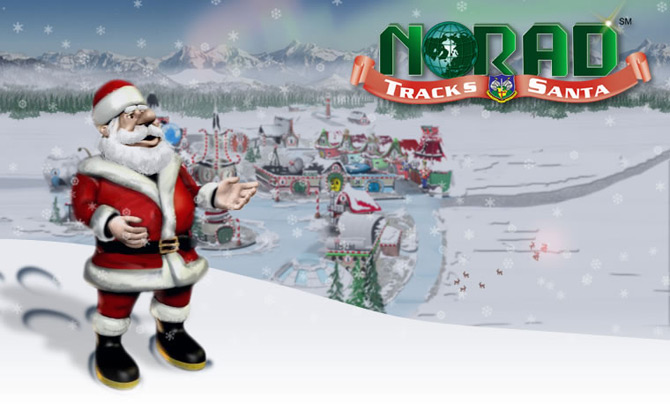
Like so many origin stories, NORAD’s mission to track Santa truly began with an accident when in 1955 a young child, trying to reach Santa, dialed a misprinted phone number from a department store ad in the local newspaper and instead of calling Santa, the child reached the Continental Air Defense Command (CONAD) Operations Center in Colorado Springs, Colorado.
Air Force Col. Harry Shoup, the commander on duty that night who answered the child’s phone call, was quick to realize a mistake had been made and assured the child he was Santa. After more incoming calls, Shoup assigned a duty officer to continue answering calls and a tradition was born, that continued when NORAD was formed in 1958.
Each year since, NORAD has dutifully reported Santa’s location on Dec. 24 to millions of children and families across the world. Because of the support, services and resources generously provided by volunteers and our government and corporate contributors, NORAD Tracks Santa has persevered for more than 65 years.
In fact, what started because of a typo has flourished and is recognized as one of the Department of Defense’s largest community outreach programs.
Each year, the NORAD Tracks Santa Web Site receives several million unique visitors from more than 200 countries and territories around the world. Volunteers typically answer more than 130,000 calls to the NORAD Tracks Santa hotline from children across the globe.
In addition to the phone line and website, children and the young-at-heart can track Santa through our mobile apps and social media platforms:
Facebook: https://www.facebook.com/noradsanta
Twitter: https://twitter.com/NoradSanta
YouTube: http://www.youtube.com/NORADTracksSanta
Instagram: https://www.instagram.com/noradtrackssanta_official
NORAD Tracks Santa Website: https://www.noradsanta.org
NORAD Tracks Santa Newsroom: https://noradsantanews.com/newsroom
Several contributors such as OnStar and Amazon Alexa also provide convenient ways to keep tabs of Santa’s location.


