FRENCH ONION CHICKEN

These were serious Dolly Parton chicken breasts that I found on sale.  I just didn’t realize HOW big they were until I opened the package today.  I made these tonight with bone in breasts, but next time will use boneless to make the meal easier for everyone.

FRENCH ONION CHICKEN
4 chicken breasts
4 tablespoons butter
4 slices bacon, diced and browned
1 package Laura Scudder’s French onion dip mix
2 tablespoons dehydrated red pepper
1/3 cup flour
1 large bunch green onions, sliced
2 cups homemade chicken broth
PURE
1 cup sour cream

  • Rehydrate the dehydrated red pepper in chicken broth for an hour before beginning to cook.
  • In a large skillet melt butter.
  • Sift together the flour and Laura Scudder’s green onion dip mix into a large plastic bag.
  • One at a time dredge chicken in flour mixture coating well.
  • Brown chicken on both sides until crisp.
  • Using an electric skillet, spray with PURE.
  • Add browned chicken breasts.
  • Gently pour the broth mixture around the edges of the chicken. 
  • Top chicken pieces with green onions.
  • Set on 200 degrees and simmer for an hour.
  • Brown bacon and drain oil.
  • Remove chicken and keep warm.
  • Sprinkle the bacon over the chicken pieces.
  • Bring drippings to a boil and reduce to 1 cup.
  • Remove from heat and quickly whisk in sour cream for gravy.
  • Serve with mashed potatoes.

Blue and Yellow Corn Muffins from Bobby Flay’s Mesa Grill Restaurant

Presentation and taste…
Mostly taste!  These little gems are Bobby Flay’s Blue and Yellow Corn Muffins. According to Bobby, these are the most consumed item at hisMESA GRILL restaurants.  They are the hit of his bread basket.

And look close, Fresh sweet corn, red bell peppers and jalapeños add color, texture and taste. Out of the ordinary muffins to be sure.

Finding the blue corn meal can be a bit of a challenge.  There are plenty of places on the internet to order.  I found this at my neighborhood store.  Oddly enough, it was not on the shelf sitting next to “regular” corn meal, it was sitting in the gourmet food section.  So, you may need to hunt, but it does exist, and it is available.  Just start asking.

But, the blue is just for looks.  Tastes the same as yellow corn meal.  So, feel free to use this recipe with the easy to find stuff.

One other note, I use something called “Polenta Corn meal”.  The ingredient list is exactly the same, but the color is much deeper yellow. Tastes the same, just better presentation.

Makes 12 large muffins or 3 dozen little mini muffins…

Nonstick cooking spray
6 TBS Butter
1 cup fresh Sweet Corn kernels (can use frozen)
1/2 cup finely diced Red Onions
1/2 cup finely diced Red Bell pepper
1/2 cup smashed and chopped roasted Garlic (about 6 cloves)
2 jalapeño Chili Peppers, finely diced 
2 TBS finely chopped Cilantro
1 1/2 cup all-purpose Flour
1TBS Baking Powder
1/2 tsp Baking Soda
4 tsp Kosher Salt
1 1/3 cups whole Milk
4 large Eggs
2 TBS Honey
1 cup Yellow Corn Meal
1 cup Blue Corn Meal


OK, before I get to the instructions, a bit of fair warning, if you compare the ingredient list to what is printed in the Mesa Grill Cookbook, there are a couple of little changes.  I doubled the amount of corn.  I like corn.  I like the looks of corn just busting out of these muffins when you break into one.  And the Kansas Sweet Corn right now is the best in the world.  I also roasted the garlic cloves (350 degree oven, rubbed with olive oil, wrapped in aluminum foil for 30 minutes).  The book says to mince the cloves.  I roast em, smash em with the blade of a knife and chop those. The roasting adds deeper garlic flavor.  The smashing makes more of a paste, makes for a creamier taste.

  1. Roast the garlic while you Mise en Place the veggies.  Start chopping.
  2. Rack in the middle of the oven, preheated to 400 degrees.  Grease a 12 muffin pan, or mini muffin pans.  I was going to serve these with soup, so made mini muffins that worked great as croûtons.
  3. In a small saucepan, melt the butter, add the onion and cook until soft, about 4 minutes.  Add the smashed and diced garlic.  Divide the mixture evenly between two bowls.
  4. In another large bowl, whisk together the milk, honey, eggs, red peppers, jalapeños, corn and cilantro.  Add half of the mixture in with each of the bowls containing the onion mixture.
  5. Put the blue and yellow corn meal in separate bowls.  Add half the flour, baking powder and baking soda in with the corn meal.  Sprinkle a bit of salt in each.  Mix each corn meal mixture with the separate onion mix. 
  6. Put a spoon full of each mixture side by side in a muffin mold.  Do not mix, as you want the Yin/Yang look.  Bake for 16 minutes (or for 14 minutes if you are making the mini muffins).
And, I used these as the base for a Cajun Spiced “Taco” salad Casserole, Click HERE to see that post over on my own site.
Here’s a few more photos to give you a better idea of how to make these…


This is the third recipe I made from the book.  Great to cook from, great to inspire (and even better to eat from!)


Bobby is a winner!


Dave here from MY YEAR ON THE GRILL. It really is just this easy!  

 … I CAN COOK THAT! 

And so can you!

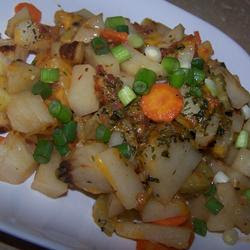
Healthy Meals ~ Side Dish

Do you need a great lowfat side dish to pair with a juicy piece of grilled chicken or fish? This Vegetable Bake is both tasty and low in fat.

Ingredients
• vegetable cooking spray
• 2 potatoes, cubed
• 1 carrot, sliced
• 2 onions, sliced
• 1 green bell pepper, chopped
• 1/3 cup fat free Italian-style dressing
• 1/8 teaspoon garlic salt
• 1/4 teaspoon cayenne pepper
• 1/8 teaspoon onion salt

Directions
1. Preheat oven to 350 degrees F. Spray a 9 x 13 inch baking pan with cooking spray.
2. In prepared pan, combine potatoes, carrots, onions and bell pepper.
3. In a small bowl combine Italian dressing, garlic salt, cayenne pepper and onion salt. Pour over vegetables.
4. Bake, covered, for 15 minutes. Uncover, stir and bake for 10 minutes more.

Tip: Leave the skins on your potatoes to save time and get extra nutrients.

Serves 6, 98 calories per serving, only .2 grams of fat, and no cholesterol. Enjoy!

Photo Credit

QUICK & EASY CHICKEN CHILI and CHEDDAR CHEESE BISCUITS

QUICK & EASY CHICKEN CHILI
3 skinless, boneless chicken breasts, frozen
2 cups homemade chicken broth, frozen
1 can cream of potato soup
1 jar dried beef, chopped
1 Williams chili mix package
1 can chopped green chilies
  • Place frozen chicken breasts on the bottom.
  • Pour green chilies over chicken pieces.
  • Top with cream of potato soup.
  • Top with frozen broth.
  • Sprinkle chili seasoning mix on top of chicken broth.
  • Top with beef pieces.
  • Slow cook on high for 2 hours. Reduce to low for 6 hours. Or cook on low 10 hours.
As the slow cooker heats up, the broth will melt absorbing the chili seasoning mix which will then be absorbed by the potato soup and by the end of the day you have a huge bowl of wonderful yummy goodness perfect for a crisp fall evening. Serve with cheddar cheese biscuits.

Hubby likes the biscuits a bit more done and the rest of us like them a little lighter! Either way they are really yummy.

CHEDDAR CHEESE BISCUITS
2 1/2 cups Bisquick
1 cup shredded cheddar cheese
2 teaspoons celery seeds
1 egg, room temperature
1 cup milk 
  • Combine Bisquick and seeds and mix well.
  • Add cheese and mix again. 
  • Whisk egg and milk together. 
  • Gradually add egg mixture to Bisquick mixture and mix until well blended. 
  • Drop by spoonfuls onto a well greased cookie sheet or use a mini-muffin pan.
  • Bake at 375 degrees for 20 minutes.

Tuesdays with Dorie ~ CARAMEL PUMPKIN PIE

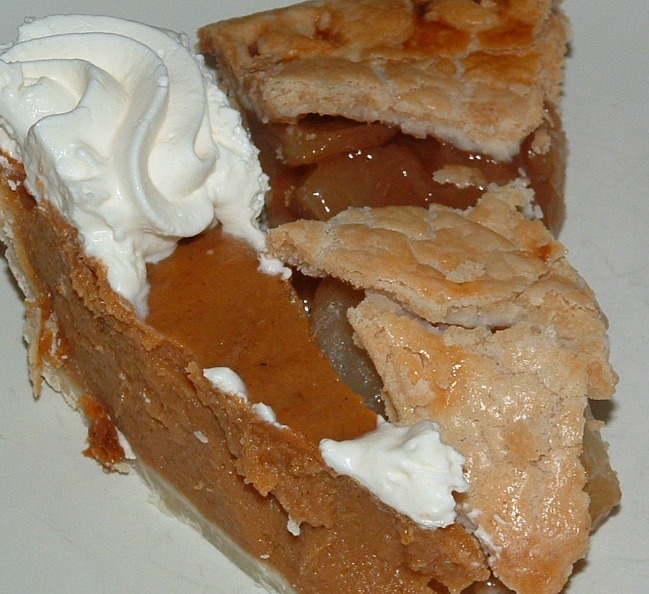
Janell of Mortensen Family Memoirs picked Caramel Pumpkin Pie on pages 322 and 323. We were having a family dinner and I needed 2 pies so I made this weeks and next – talk about killing 2 birds with 1 stone.  There was nothing of either pie left!  They were both so yummy!

aprons 3

READY, SET, START YOUR OVENS!

The (3rd Annual) NEED TO KNEAD has moved to OUR KRAZY KITCHEN.
We all have some favorite family bread recipes tucked away.
I know that at certain times I have the NEED TO KNEAD, primarily during the holidays or from October through April, those long cold months of winter. The rest of the time my Bread Machine Rules.
I thought we could all come together and share our daily bread recipes.
And I mean all breads! White, wheat, banana, braided, etc…  whatever you’re in the mood to share.
Ironically National bread month is November at the beginning of our holiday baking crunch.

Just post your recipes anytime until November 15, 2010, go over and link up at OUR KRAZY KITCHEN so that we can all visit you. You can even link to recipes you have previously posted. Add this button to your participating posts and link to this blog. Your blog can be in any language, but a translator on your site will help any who don’t speak the same language.

Bread History According to National Bread Month:

..”It was only after the Pilgrims came to America that baking bread in private homes became the norm. Our ancient forbearers baked bread in communal ovens. These ovens were built on the out skirts of villages, near water due to the extreme fire hazards of the early brick ovens. Later in Europe, after the Romans taught the indigenous peoples about bread making, bread was still baked in large ovens. Except these ovens were not communal ovens they were owned, as was the mill, by the local lord. This made families dependant on the lord for their daily bread. By the Middle Ages baking guilds controlled who and how bread were baked and sold. These organizations limited the number of bakers and bakeries in each village and that meant even impoverished peasants had to purchase bread.
When the first colonists came to North America they demanded the right to be in control of their daily bread. Households at last could bake bread at home. Even commoners were in control of their daily bread….”

Resource LinkCelebrate National Bread Month with crusty water rolls: recipe

Bread is one of the oldest prepared foods, dating back to the Neolithic era. The first breads produced were probably cooked versions of a grain-paste, made from ground cereal grains and water, and may have been developed by accidental cooking or deliberate experimentation with water and grain flour. Descendants of these early breads are still commonly made from various grains worldwide, including the Mexican tortilla, Indian chapatis, rotis and naans, Scottish oatcake, North American johnnycake, Middle Eastern Pita bread (Kmaj in Arabic and Pitot in Hebrew) and Ethiopian injera. The basic flat breads of this type also formed a staple in the diet of many early civilizations with the Sumerians eating a type of barley flat cake, and the 12th century BC Egyptians being able to purchase a flat bread called ta from stalls in the village streets. http://en.wikipedia.org/wiki/Bread

Have you heard about the Need to Knead Bread Roundup?  The need to knead bread round-up is almost here. I thought maybe it was time to share with you some food for thought (Pun intended) with a few great resource sites for baking.
 General Tips to remember:
  • Baking in a high place, a dry place or in a place that can have sudden changes in barometric pressure. All these factors can alter how yeast breads knead, rise and bake.
  • To determine if your yeast is still active, dissolve 1 tsp. sugar in 1/2 cup lukewarm water in a see-through measuring cup. Sprinkle 1 tbsp. yeast slowly over the water. Stir and let stand for 10 minutes. At the end of this time, the yeast should have foamed up to reach the 1 cup mark. Yeast that does not reach this mark in 10 minutes will not produce a good loaf and should be discarded.
  • Water can replace milk. The texture will change a little, but the bread will still be very tasty and good to eat.
  • White sugar, brown sugar, honey and molasses can be interchanged equally in bread dough. The sugar in bread dough supplies the tiny yeast plants with instant food and gets them off to a fast start. Artificial sweeteners are not recommended for yeast breads because they cannot be used by the yeast as natural sweeteners can.
  • Fats can be replaced with applesauce or prune puree. The texture of the bread will be more dense. A general rule of thumb is to substitute 1 1/2 tablespoons of applesauce/prune puree for every 3 tablespoons of fat.
  • Salt is added to yeast breads not only for flavor but also to keep the yeast fermentation in the bread dough under control. Too little salt will allow the yeast to push the dough so high that it may even collapse. Too much salt will keep the dough from rising enough.
In preparation for the upcoming National Bread Month in November and for our driving desires and “NEED TO KNEAD” as well as the upcoming Holidays let’s all join in together on October 31st, 2010 to November 15, 2010 and round-up all of our delicious bread recipes to look back on when we need to bake fantastic bread. I know many of mine were handed down by my grandma.
~ We are looking for all sorts of breads: quick breads, savory breads, sweet ones, yeast breads, no-knead breads, 5-minute breads, vintage or gluten-free breads, etc, etc, etc!

~ Help us promote this bread roundup by putting the above banner in your sidebars and posting about the 3rd Annual Need to Kneed Roundup on your own blogs.

~ We would love it if you would join us, and we would love it if you would help us spread the word by putting this button in your sidebars or even writing a short post about the roundup. Post your links from October 31, 2010 to November 15, 2010 for all your bread recipes.

~ Have fun blog hopping through the bread recipes, make new friends, find new family-favorite recipes, comment, enjoy the process of community-building.

READY, SET, START YOUR OVENS!

We all have some favorite family bread recipes tucked away.
I know that at certain times I have the NEED TO KNEAD, primarily during the holidays or from October through April, those long cold months of winter.
The rest of the time my Bread Machine Rules.
I thought we could all come together and share our daily bread recipes.
And I mean all breads! White, wheat, banana, braided, etc…
whatever you’re in the mood to share.
Ironically National bread month is November at the beginning of our holiday baking crunch.

Just post your recipes anytime until November 15, 2010, come back here to link up so that we can all visit you. You can even link to recipes you have previously posted. Add this button to your participating posts and link to this blog. Your blog can be in any language, but a translator on your site will help any who don’t speak the same language.

Bread History According to National Bread Month:

..”It was only after the Pilgrims came to America that baking bread in private homes became the norm. Our ancient forbearers baked bread in communal ovens. These ovens were built on the out skirts of villages, near water due to the extreme fire hazards of the early brick ovens. Later in Europe, after the Romans taught the indigenous peoples about bread making, bread was still baked in large ovens. Except these ovens were not communal ovens they were owned, as was the mill, by the local lord. This made families dependant on the lord for their daily bread. By the Middle Ages baking guilds controlled who and how bread were baked and sold. These organizations limited the number of bakers and bakeries in each village and that meant even impoverished peasants had to purchase bread.
When the first colonists came to North America they demanded the right to be in control of their daily bread. Households at last could bake bread at home. Even commoners were in control of their daily bread….”

Resource LinkCelebrate National Bread Month with crusty water rolls: recipe

Bread is one of the oldest prepared foods, dating back to the Neolithic era. The first breads produced were probably cooked versions of a grain-paste, made from ground cereal grains and water, and may have been developed by accidental cooking or deliberate experimentation with water and grain flour. Descendants of these early breads are still commonly made from various grains worldwide, including the Mexican tortilla, Indian chapatis, rotis and naans, Scottish oatcake, North American johnnycake, Middle Eastern Pita bread (Kmaj in Arabic and Pitot in Hebrew) and Ethiopian injera. The basic flat breads of this type also formed a staple in the diet of many early civilizations with the Sumerians eating a type of barley flat cake, and the 12th century BC Egyptians being able to purchase a flat bread called ta from stalls in the village streets. http://en.wikipedia.org/wiki/Bread

Have you heard about the Need to Knead Bread Roundup?  The need to knead bread round-up is almost here. I thought maybe it was time to share with you some food for thought (Pun intended) with a few great resource sites for baking.
 General Tips to remember:
  • Baking in a high place, a dry place or in a place that can have sudden changes in barometric pressure. All these factors can alter how yeast breads knead, rise and bake.
  • To determine if your yeast is still active, dissolve 1 tsp. sugar in 1/2 cup lukewarm water in a see-through measuring cup. Sprinkle 1 tbsp. yeast slowly over the water. Stir and let stand for 10 minutes. At the end of this time, the yeast should have foamed up to reach the 1 cup mark. Yeast that does not reach this mark in 10 minutes will not produce a good loaf and should be discarded.
  • Water can replace milk. The texture will change a little, but the bread will still be very tasty and good to eat.
  • White sugar, brown sugar, honey and molasses can be interchanged equally in bread dough. The sugar in bread dough supplies the tiny yeast plants with instant food and gets them off to a fast start. Artificial sweeteners are not recommended for yeast breads because they cannot be used by the yeast as natural sweeteners can.
  • Fats can be replaced with applesauce or prune puree. The texture of the bread will be more dense. A general rule of thumb is to substitute 1 1/2 tablespoons of applesauce/prune puree for every 3 tablespoons of fat.
  • Salt is added to yeast breads not only for flavor but also to keep the yeast fermentation in the bread dough under control. Too little salt will allow the yeast to push the dough so high that it may even collapse. Too much salt will keep the dough from rising enough.
In preparation for the upcoming National Bread Month in November and for our driving desires and “NEED TO KNEAD” as well as the upcoming Holidays let’s all join in together on October 31st, 2010 to November 15, 2010 and round-up all of our delicious bread recipes to look back on when we need to bake fantastic bread. I know many of mine were handed down by my grandma.
~ We are looking for all sorts of breads: quick breads, savory breads, sweet ones, yeast breads, no-knead breads, 5-minute breads, vintage or gluten-free breads, etc, etc, etc!

~ Help us promote this bread roundup by putting the above banner in your sidebars and posting about the 3rd Annual Need to Kneed Roundup on your own blogs.

~ We would love it if you would join us, and we would love it if you would help us spread the word by putting this button in your sidebars or even writing a short post about the roundup. Come back October 31, 2010 to November 15, 2010 to link all your bread recipes.

~ Have fun blog hopping through the bread recipes, make new friends, find new family-favorite recipes, comment, enjoy the process of community-building.

Save Room for Dessert…Fudgy Chocolate Bundt Cake

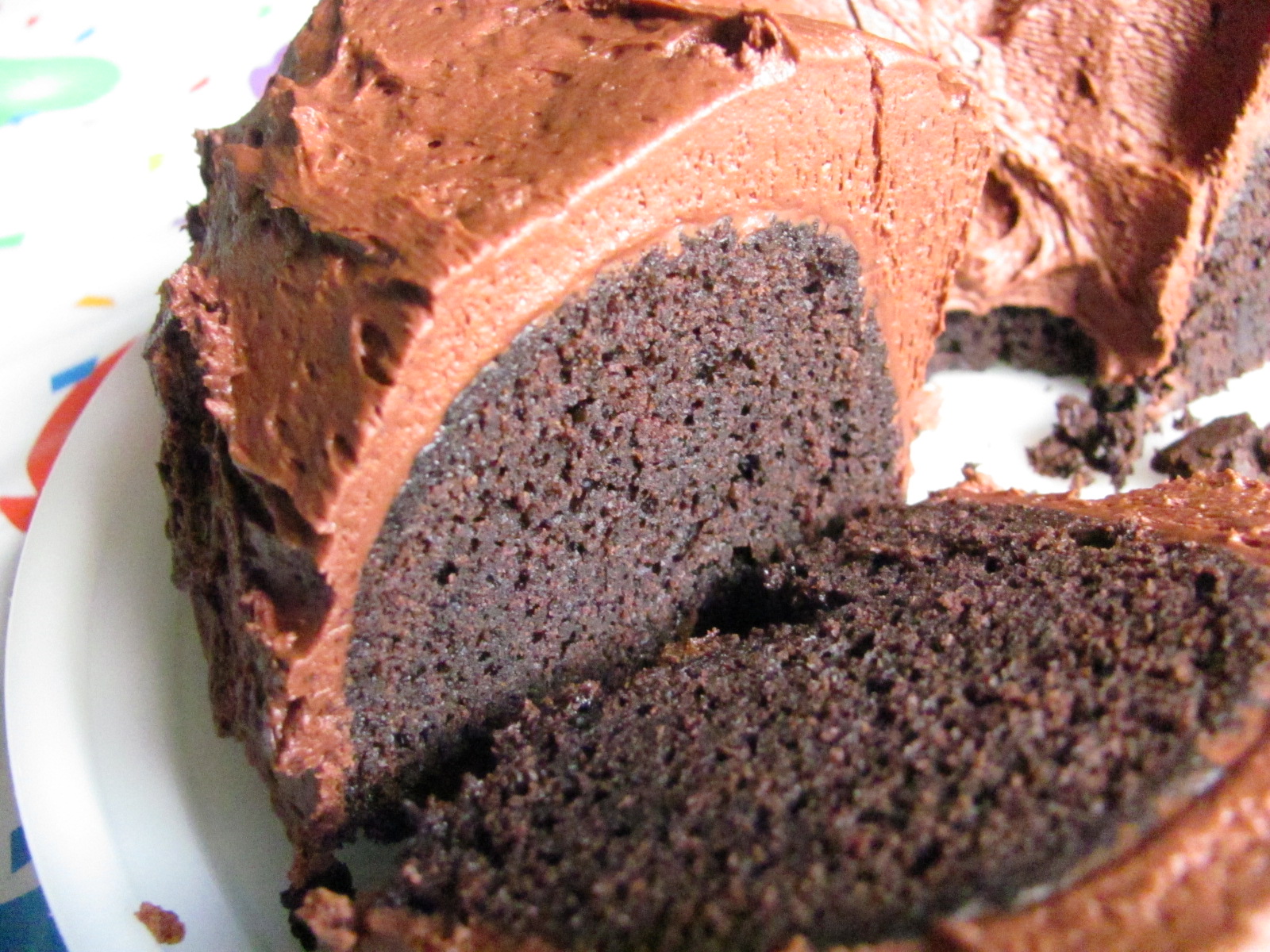
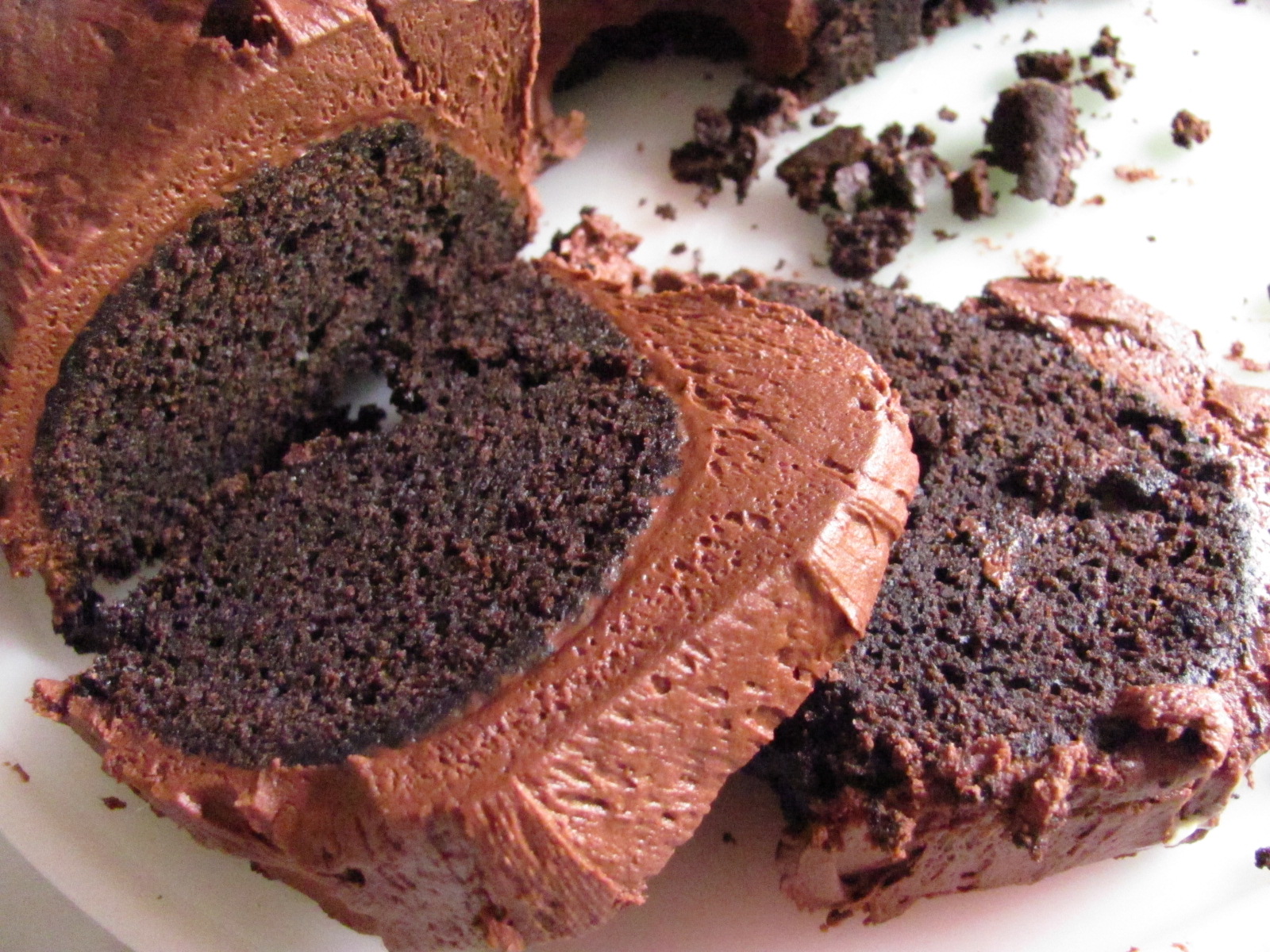
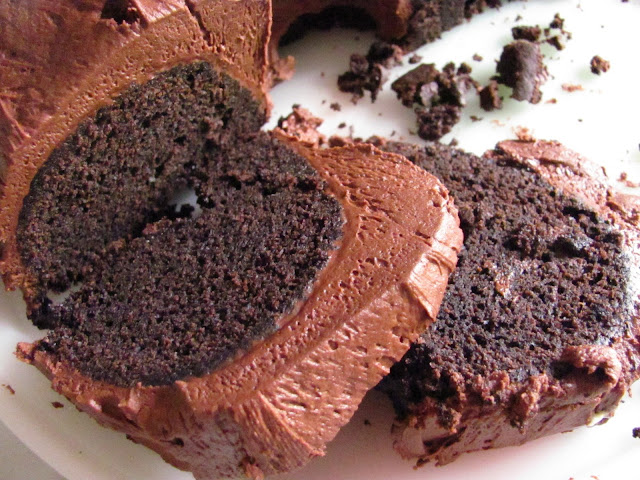
Last Tuesday, we celebrated Ann’s birthday, one of my terrifically awesome staff members.  Rather than a potluck luncheon, Ann chose to order poboys from one of our local restaurants.  Her cake of choice was chocolate, and this was my contribution.  I baked the cake on Monday evening, late on Monday evening, actually, with the help of Andrew.  I should know by now, that any activity after 4 pm which involves both baking and a 5 year old needs sharp attention, something I am quite short of at 7:30 pm.  So, the cake was baked sans water & coffee.  I remembered this about 10 minutes after the cake was in the oven.  One of those, “Oh he$l!” expressions escaped my lips, and then I just shrugged.  If it turned out a disaster, I would simply bake another, in the morning.  Luckily, the cake was fine, although it’s texture was that of a brownie.  Not a bad thing, mind you, and everyone said it was “really good.”  So, there you go, if you’re feeling adventurous, leave out the liquid, or follow the cake recipe as written, which is the way I’ve made it for years, and I’ll guarantee your chocolate happiness!  Whatever you decide, don’t forego the frosting, as it is the pièce de résistance.
Don’t forget to enter my giveaway to win a copy of Steff Deschene’s award-winning book, The Ice Cream Theory. Leave a comment and tell me your favorite ice cream flavor! So, earlier today, I had a craving for an ice cream soda made with vanilla ice cream and orange soda, what’s your favorite today? Click here to enter and tell me!


Fudgy Chocolate Bundt Cake Printable recipe
2 cups flour
1 1/2 cups sugar
1/2 cup brown sugar
2 oz unsweetened chocolate squares
1/2 cup Dutch processed cocoa
2 sticks unsalted butter
8 oz Greek yogurt
1/2 cup water
1/4 cup brewed coffee, room temp
1 tablespoon vanilla extract
2 large eggs
1 teaspoon baking soda
1/2 teaspoon salt

Preheat oven to 350 degrees.
Butter a Bundt pan, then dust with cocoa as you would with flour; set aside.
Melt butter and chocolate squares together in microwave in 30 second intervals, stirring after each 30 seconds, until chocolate is smooth; stir in cocoa and set aside.
In a measuring cup, measure in 1/2 cup water and then add coffee until 3/4 mark is reached; set aside.
Pour chocolate mixture into a large mixing bowl or the bowl of a stand mixer.
To the chocolate mixture, add granulated and brown sugar, cocoa, yogurt, vanilla, eggs and water/coffee mixture.
Beat together until well-mixed.
In a small bowl, whisk flour, soda and salt; add flour mixture to the chocolate mixture, mixing until thoroughly combined.
Pour batter into prepared Bundt pan.
Bake 40-45 minutes at 350 degrees.
Allow cake to cool for 20 minutes before inverting onto a plate.
Let cake cool completely before frosting the cake.


Hershey’s “Perfectly Chocolate” Chocolate Frosting
1 stick unsalted butter
2/3 cup HERSHEY’S Cocoa
3 cups powdered sugar
1/3 cup milk
1 teaspoon vanilla extract
1/8 tsp salt (my addition)
Melt butter. Stir in cocoa and salt. Alternately add powdered sugar and milk, beating to spreading consistency. Add small amount additional milk, if needed. Stir in vanilla.


IT’S TIME FOR SOME FOOTBALL FOOD!

We’re HUGE football fans!  Well, it’s that time of year again! Football season is already several weeks old (where does the time go?) and that means it’s time for tailgating again at the games, serious football food and game day buffets.  Bring over your best appetizers and your biggest appetite and oh don’t forget the Brewskis to go with it all.  I like mine really cold please with a side of lime!
Tailgating Time will be posted every Sunday at noon and open all week for you to add your football favorites. We’ll play each and every week until Superbowl Sunday. I can’t wait to see what you’ll be bringing!
It’s Tailgating Time!
HOSTED BY:
Martha at Seaside Simplicity 
Tamy at 3 sides of Crazy 
Lyndsey at Tiny Skillet

Would you like to be a host of Tailgating Time too? 
Leave me a comment here with your email or with Martha over at Seaside Simplicity so we can send you the code and add you to the host list – more exposure, more links, more football food!

WEEKLY MENU

Menu Plan Monday hosted by Laura at I’m an Organizing Junkie

DATE BREAKFAST LUNCH DINNER
Monday 10/18 CEREAL SANDWICHES Recipe Experiment Night

Tuesday 10/19 TOAST LEFTOVERS Chicken Enchiladas Suiza
and
Refried Beans
Wednesday 10/20 YOGURT SOUP Orange Honey Chicken
Thursday 10/21 FRUIT CHEESE & FRUIT Tuna Noodle Bake
Friday 10/22 OATMEAL C.O.R.N. Chicken Fried Chicken
with mashed potatoes and
Peppered Gravy
Saturday 10/23 Blueberry Crumb Cake leftovers Roast Chicken w/ Lemon Herb Sauce
and
Maple Glazed Carrots
Sunday 10/24 Huevos con Yummy Deviled Eggs Carnitas ~ Traditional Style
with the leftover
Refried Beans