PLANTAIN FUFU FRIED CHICKEN

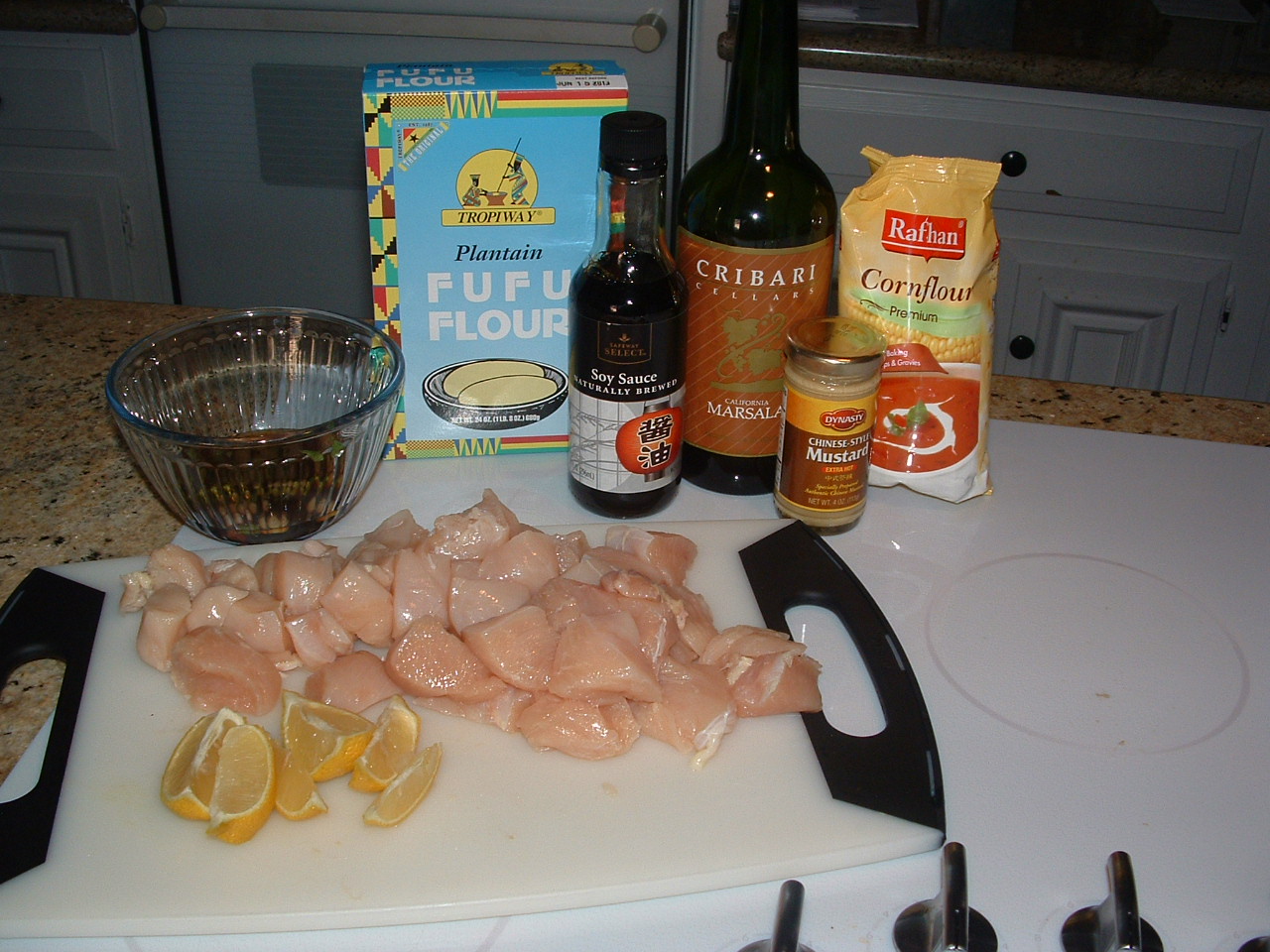
I found a recipe recently for Japanese Fried Chicken that I was going to try for dinner tonight.  Then I tried to accumulate all the ingredients.  Long story short, I rewrote the recipe to work around the ingredients I did find.  The first change I made was the potato starch the recipe called for.  I did do research and found that you could substitute corn starch, but that seemed too plain so I went to a local market that has several aisles of international foods and started searching.  I found two things of interest: Fufu Flour and Corn Flour.  Fufu flour is from Africa and this particular one is made from Plantains so I guess I could call this Banana Fried Chicken.  Both of these flours are very fine and resemble regular corn starch in texture and coat very well.

PLANTAIN  FUFU FRIED CHICKEN  aka BANANA FRIED CHICKEN
1 1/2 pound chicken breasts, cut into bite sized pieces
2 tablespoons soy sauce
2 tablespoons Marsala wine
1 large green onion, sliced thin
salt and pepper
4 tablespoons butter
1/2 cup FUFU flour
1/2 cup corn flour
Chinese hot mustard for dipping

  • In a large bowl combine the soy sauce, Marsala wine and green onions.
  • Place chicken in bowl and toss to coat.  Refrigerate for several hours.
  • Drain chicken pieces.
  • In a large bag combine the FUFU flour, corn flour, salt and pepper.
  • In a large skillet melt butter.
  • Place chicken pieces in bag and shake to coat.
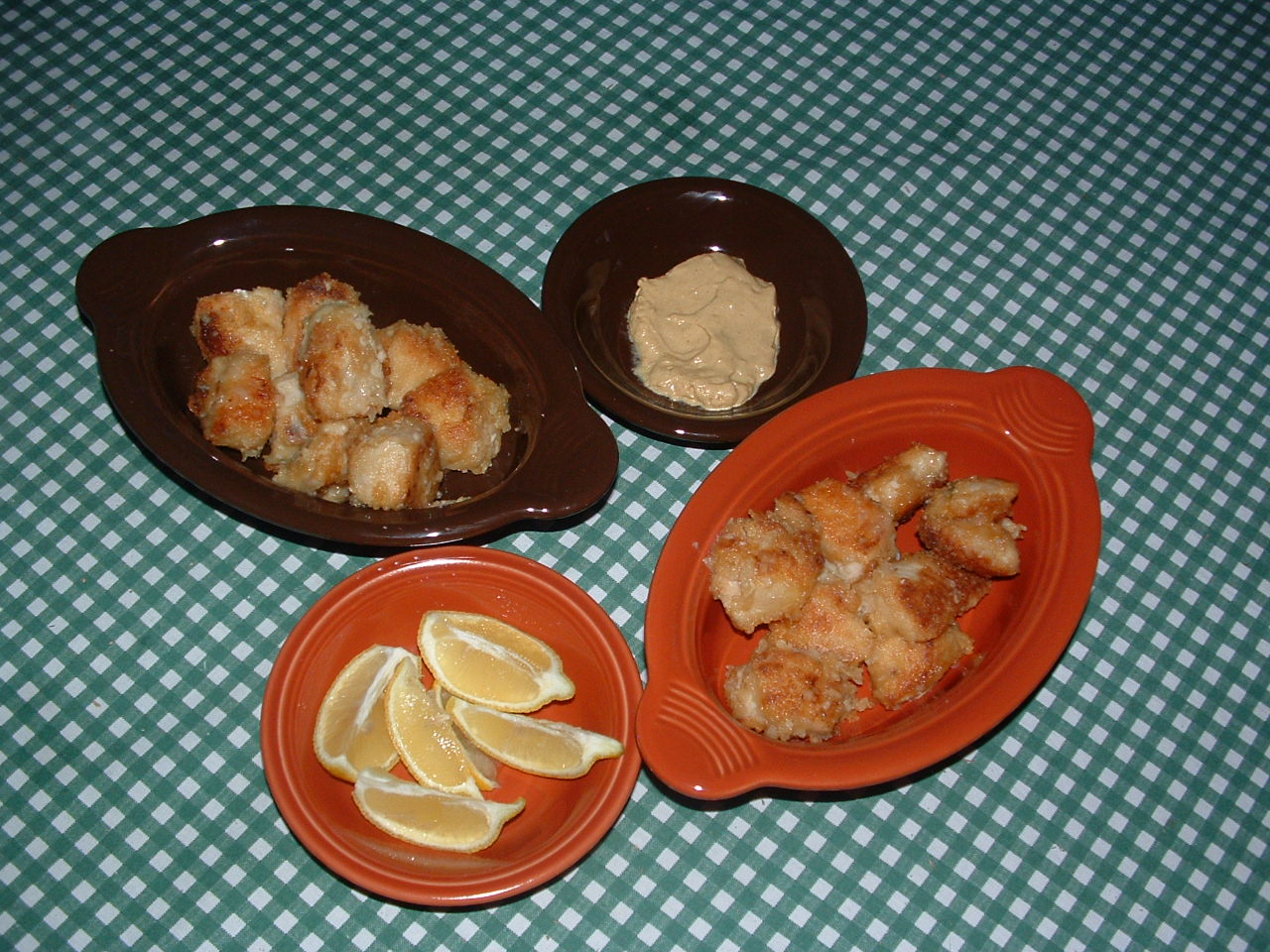
  • Add chicken pieces to  hot butter.  When brown and crusty, turn the pieces.
  • Drain on paper towels.
  • Serve with hot Chinese hot mustard and lemon slices.
By the way, it was really good!
aprons 3

Mushroom/Tomato Goat Cheese Pizza and a dough recipe

I love pizza! 
Here’s a funny little stat… I make @8 pizzas every two weeks.  I always use a fresh baked from scratch dough.  That sounds like a lot, and it sounds like a lot of work, but nope.
Easy as pie (pizza pie) to make your own dough.  I actually use a modified flatbread recipe (it has a small amount of yeast, but no rising time) for my dough.  I make it in a large batch, divide the batch into 4ths.  That is the perfect size to make 2 personal size pizzas.  One with my wife’s favorite toppings and one with the better toppings for me.
Once I have the dough, I store the divides in separate ziplock bags in the fridge.  If I don’t plan to make the za’s within the two weeks, these freeze just fine.  With the aid of my kitchenaid, it takes 15 minutes to make the dough; just a little longer back when I kneaded everything by hand.  That’s a small investment in time for 8 pizzas.
This was my lunch yesterday…
Leftover Mushrooms sliced, 
Leftover Tomatoes, 
Leftover Goat Cheese 
A sprinkling of Balsamic Vinegar
and a sprinkling of my “Not your grandmother’s Herbes de Provence” spicemix!
___________________________
If you are a novice bread maker, this pizza dough recipe is about as easy as it gets.  Just enough yeast to make the insides of the crust sweet and soft.  But crisps up nicely on the outside.  The dough goes right from the kneading process to the fridge.  So, there is no rise time to complicate the process.

The flour and water used in the mix should be as cold as possible.  That’s what allows the yeast to flavor the bread, but keeps the flatbread… flat. 

But I digress away from the recipe…

4 1/2 cups chilled Flour
1 3/4 teaspoon Salt
1 tsp instant Yeast
1/4 cup Olive Oil
1 3/4 cups COLD Water (40 degrees)

OK, did you read the 2 cold ingredients. Takes an extra hour or two of planning, I measure the water and the flour and pop them in the fridge for a couple hours to get cold. The small amount of yeast, relative to the amount of flour and the cold will make for a flat bread, almost no fermentation (rise). Just enough to soften the taste, but not make a big rise. In my pre Kitchenaid days, I mixed and kneaded this recipe in a gallon size ziplock bag. Worked great, largely I believe because of the oil in the recipe. Without that, the dough would be too sticky to mix in a bag. But this sure made clean up easy.

Here’s what I did…

  • Mix the dry ingredients first
  • add the water and oil about a fourth of each at a time
  • mix well until all the flour is hydrated and you form a large dough ball in your bag 
  • continue kneading for about 10 minutes, or if you use your kitchenaid, use the dough hook attachment, and allow the machine to knead for 7 minutes
  • And now, time to divide… Generously sprinkle a work surface with flour. Also, prepare 4 ziplock sandwich size bags (bigger works fine as well) by spraying the insides of them with spray canola oil.
  • Plop the dough ball into the flour and coat well. Divide into 4 equal parts (or fewer if you know you are making larger pizzas). Put each dough ball into a prepared ziplock bag and refrigerate at least 6 hours, and preferably overnight. When it comes cooking time, allow the dough to reach room temp.
When it comes cooking time, allow the dough to reach room temp.
If you are making one big one, just roll out round and flat (actually, any shape you like).  Add your toppings and bake in a preheated 500 degree oven for 10-12 minutes.
Not a bad lunch!
Dave here from MY YEAR ON THE GRILL. It really is just this easy!  

 … I CAN COOK THAT! 

And so can you!

REDNECK CUPCAKE WARS~BBQ CHICKEN CHILE CORNBREAD REDNECK CUPCAKES

Recently my buddy Dave over at My Year on the Grill “invented” the Redneck Cupcake.  Pure genius I tell you!  He is also trying to win Project food blog.  Go check it out and vote for him.
I do like the “cake” part on the bottom – so much easier to eat!  The “cake” envelops the meat and the cheese oozes and goozes down into the meat.   It was also my birthday last week and my mom sent me a box full of “goodies”.  Among those goodies were these awesome muffin tart baking cups that require no muffin tin and are larger and flatter than the average so once again they are easier to eat. I may try those next time, but this time I think in order to qualify as a “redneck” cupcake they must be made in leftover birthday wrappers.
Dave and I are both believers in using all your leftovers as he demonstrates with his Redneck Cupcakes.   My recipe uses all the small tidbits from when you skin your Rotisserie chicken.  I use absolutely everything from my rotisserie chickens including the bones!

BBQ CHICKEN CHILE CORNBREAD REDNECK CUPCAKES makes 15-18 cupcakes

2-3 cups Rotisserie Chicken pieces
1/4 cup favorite BBQ sauce
Havarti cheese slices or Vermont White Cheddar, quartered
  • Toss chicken pieces with BBQ sauce and set aside for an hour before preparing muffins.
  • Preheat oven to 375 degrees.
  • Prepare the cornbread and fill baking cups 2/3 full.
  • Drain chicken pieces of excess sauce.
  • Top with a layer of meat.
  • Top with a very thin slice of cheese.
  •  Bake 20 minutes or until cornbread tests JUST done with a toothpick or until cheese oozes and goozes into the chicken pieces.
Wouldn’t these make awesome football food?  Don’t forget to join us Sunday for 
Tailgating Time will be posted every Sunday at noon and open all week for you to add your football favorites. We’ll play each and every week until Superbowl Sunday. I can’t wait to see what you’ll be bringing!
It’s Tailgating Time!
HOSTED BY:
Martha at Seaside Simplicity 
Tamy at 3 sides of Crazy 
Lyndsey at Tiny Skillet

aprons 3

Aztec Chicken with Fresh Pico de Gallo

Oh yes, chicken again!!  Here’s a healthy meal full of fresh ingredients and tons of flavor!
 
I love finding new marinade for chicken.

Dress it up and you can have your chicken a million different ways!

I loved this way!

I devised this from several different recipes and it turned out really good!
I finally put my tomatoes and peppers to good use! I made a rockin’ pico de gallo!

I bought 2 tomato plants and 1 pepper plant this year. They have all been doing very well. But all I usually do with them is add them to quesadillas or salads.

This turned out great and I can’t wait to make it again!


Check out the Our Krazy Kitchen pals who have entries in Project Food Blog!  Please take a minute and vote for them!  Vote quick!  Polls close tomorrow the 23rd!

Dave – My Year on the Grill
Heather – Girlichef
Joanne – Eats Well With Others
Kristen – Frugal Antics of the Harried Homemaker
Min – The Bad Girl’s Kitchen

Aztec Chicken Recipe 

1 1/2 pounds boneless chicken
1 tablespoon oil
4 cloves of garlic
1 medium onion
3 tablespoon cilantro
1 tablespoon paprika
1 teaspoon cumin
1 teaspoon chili powder
1 teaspoon salt
1/2 teaspoon pepper

Combine oil, garlic, onion, cilantro, paprika, cumin, chili powder, salt and pepper in a food processor. Save a bit of the mixture for while cooking. Pour the rest into a large baggie with the chicken, mix and let marinade for a few hours.

Grill or pan fry chicken until done, brushing with reserved sauce. Serve with Pico de Gallo.

Rockin’ Pico de Gallo
1 pound tomatoes, chopped
1/2 cup onion, diced
1 jalapeno, diced
3-4 cloves garlic, minced or pressed
2 tablespoons lime juice
1/4 cup cilantro, chopped
Salt and pepper

Mix everything together and refrigerate until ready to use.

Total calories for chicken = 970 calories
Total calories for pico de gallo = 140 calories

6 servings = 185 calories per serving with pico de gallo

Aztec Chicken with Pico de gallo and Cilantro Rice = 456 calorie dinner

This makes a lot of Pico de gallo but I put a bunch on my rice too!

Check out the Cilantro Rice recipe on Debbi Does Dinner Healthy.

PORK CHOPS MARSALA

Remember when I researched scampi?  And decided that scampi is not just for shrimp? Well, I got to thinking about how we get into cooking/eating ruts.  Are you in a rut?  We are sometimes even with me always trying new recipes.  I started analyzing the flavors we like and those we don’t.  Then I started wondering how I was going to transfers those like into new recipes.  I realized I don’t really need “new” recipes, I just need to “trade” out some ingredients.  This eventually led to me thinking about Chicken Marsala, one of our very favorite flavor combos. Adn that Marsala is not just for chicken.
To get you started here is a little Marsala history.

Marsala Wine Information
Marsala is the west section of Sicily, the island near the foot end of Italy. In 1798 the Sicilians managed to substitute their own wines in place of the standard rum in an English naval shipment. In those seafaring days, something had to be done to wine to allow it to last the long ocean journeys. Brandy was added to allow the wine to last longer, and to be more resistant to temperature changes. These were called “fortified wines”.

Once the British had a taste of Marsala, demand grew quickly. In the United States during Prohibition, things became even more interesting. The typical Marsala bottles made the wine look like medicine. People found that getting Marsala was less risky than other types of wine. While not as popular now, it is still used quite frequently as a cooking wine in Italian dishes.

Marsala uses the following grapes: 

  • white skin/berry grapes: Grillo, Catarratto, Inzolia and Damaschino for golden and amber Marsala
  • dark red skin/berry grapes: Pignatello, Calabrese, Nerello Mascalese, Nero d’Avola for ruby red 
Marsala is made in the “solera” tradition – a melding of years. First, a keg is filled with wine from the current vintage of grapes. Subsequent years with similar tastes are placed in kegs above the first. When liquid is drawn out of the bottom (oldest) keg, it is refreshed with liquid from the next keg up, and so on. In this manner, the taste remains the same throughout the cycle, and every bottle you get has (potentially) some liquid from the very first vintage.

Types of Marsala

    * Fine: 17° alcohol, aged >1 yr
    * Superiore: 18° alcohol, aged >2 years
    * Superiore Riserva: 18° alcohol, aged 4 years
    * Vergine Soleras: 18° alcohol, aged 5 years

Marsala was traditionally served between the first and second courses. It is now also served, chilled, with Parmesan (stravecchio), Gorgonzola, Roquefort and other, spicy cheeses.

Marsala Substitutions
I regularly get email from casual wine drinkers who come across a recipe for chicken marsala or veal marsala and want to know what other alcohol they can substitute instead. I *love* both of these dishes. Here’s the issue. Imagine you had a recipe for making orange juice and you wanted to substitute lemons instead. They’re both citrus! However they taste very different. So you’re no longer making orange juice, you’re making lemon juice now.

The same thing is true for dishes with marsala. It has a very specific dish. Sure, you could make chicken with chardonnay, or chicken with cabernet, and they might be tasty. But they are no longer chicken marsala. The flavor will be completely different. So at that point you could call it “chicken with wine” and be happy. If you want chicken marsala, then you need to find marsala, so that it tastes like marsala.

Pretty much any regular wine shop will have marsala bottles on their shelves, along with the port and sherry. Again marsala doesn’t taste like port and sherry 🙂 But that’s the type of wine it is. So I highly recommend that you take a run to your local wine shop, grab a bottle of marsala and enjoy! It lasts a long time because it’s fortified. Chicken and veal marsala are really yummy, so you’ll want to make it several times. It’s one of those staples of cooking, like having lemon juice in your fridge.

If you have serious issues with alcohol, I’m afraid there is not a non-alcoholic marsala flavoring. Note that any recipe calling for “Marsala” means this wine. Marsala is the name for this wine.

Sweet vs Dry Marsala
I get emails from cooks asking which they should use – sweet or dry marsala – in a recipe. It’s like saying you have a recipe which says to use cheddar cheese and you have mild cheddar and sharp cheddar and medium cheddar, and which should you use. You can use any of them. They are all cheddar, they will all provide a cheddar flavor. If you like mild cheddar better, you might go with that. But if you’re not a cheese fanatic you might not even really notice the subtle differences between for example mild and medium cheddar flavors when they are in a dish.

So it definitely is to taste 🙂 Do you like sweetish chicken dishes? Do you like non-sweetish chicken dishes? Are you even going to notice the difference which is that kind of subtle variation? Who knows, you might not even be able to taste any difference since both are going to taste “like marsala”. Undoubtedly you’re not going to make chicken or veal marsala only once in your life if you like it, you’ll make it every few weeks. So make it one time with the sweet and one time with the dry, and see if you can even notice any difference. Or, I suppose, have someone else add in the marsala and not tell you which they used and see if you can guess 🙂 It might be you can’t even tell which is being used, in which case it’s not worth worrying about. Use whichever one you have more of.

Storing Marsala
Marsala is a fortified wine – this means they add hard alcohol to it. This also means that, just like you can keep opened (sealed) bottles of vodka and rum on your shelves, you can also keep an opened bottle of marsala around. Yes, the flavor will gently deteriorate over time, but it won’t go from wonderful tasting to awful tasting in three days. You probably won’t even notice the flavor difference after a month or two. Still, I’d suggest drinking it all within three to four months (or cooking dishes with it). When you cook with a flavor, you get a really concentrated version of that flavor. So you want really tasty, yummy marsala flavors – not sort of stale, stagnant marsala flavors. I am very much a fan of eating food that you really enjoy, and savoring the flavors!

Marsala is fortified, so you do NOT have to store it in a fridge or take any special measures. Just keep it in a cool, dark area like any other oil or wine. Marsala will not “go bad” – it won’t turn dangerous to drink – but its flavors will fade over time.


PORK CHOPS Marsala

  • 1/4 cup all-purpose flour
  • 1/2 teaspoon sea salt
  • 1/4 teaspoon ground white pepper
  • 1/2 teaspoon dried oregano
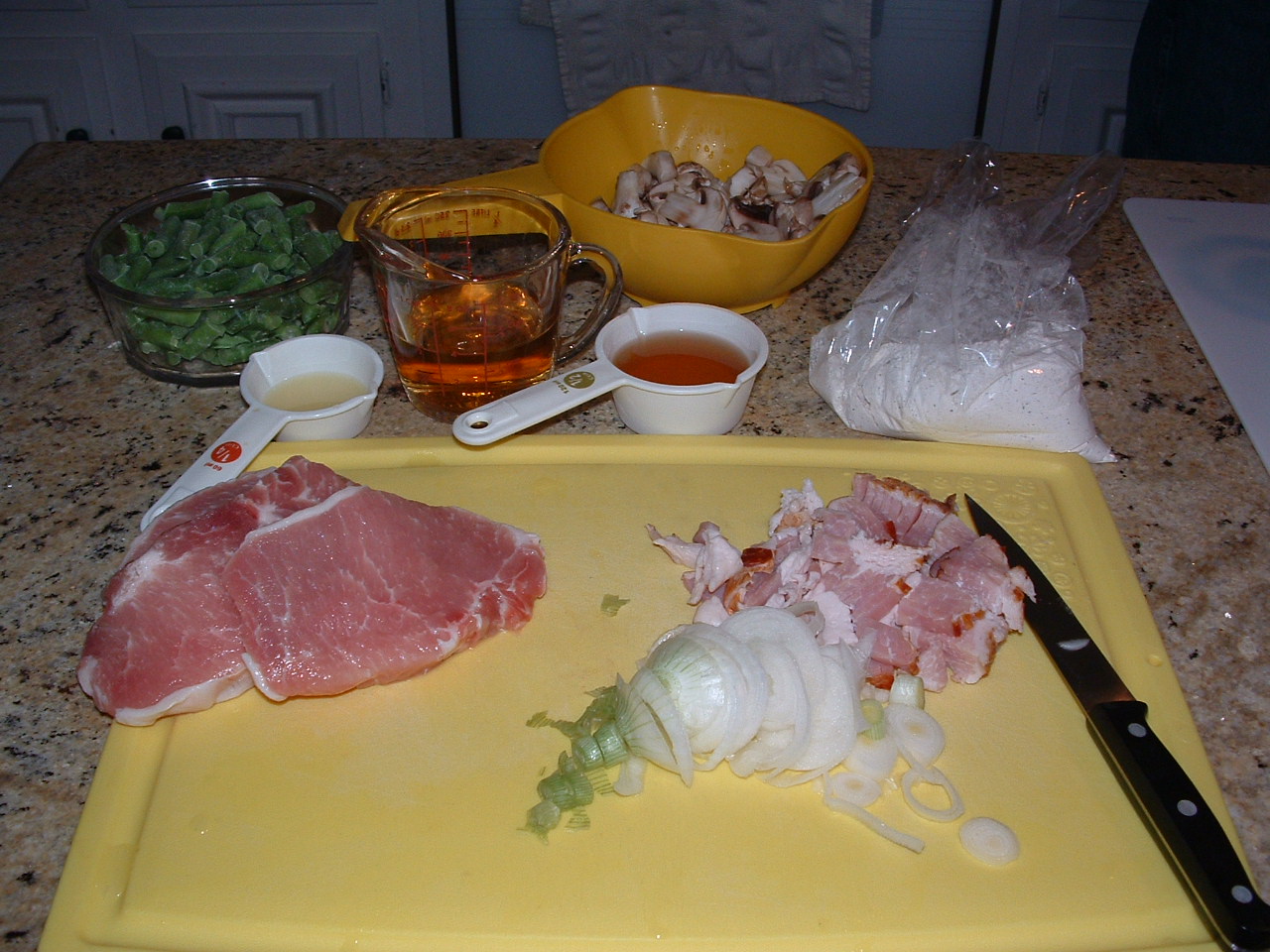
  • 4 boneless pork chops – 1/4-1/2  inch thick
  • 2 slices thick bacon, diced
  • 4 tablespoons butter
  • 1 small white onion
  • 2 cups frozen green beans
  • 1 cup sliced mushrooms
  • 1 tablespoon lemon juice
  • 1/2 cup Marsala wine
  • 1/4 cup sweet cooking sherry
  1. With a mortar and pestle grind the oregano. Sift together the flour, salt, pepper and oregano. Coat the chicken pieces well.
  2. In a heavy skillet, heat butter. Add the bacon pieces and stir fry for several minutes.  Slice onion into rings and separate. When butter is hot, saute’ onions until just caramelized.  Add the mushrooms and green beans and saute until cooked through. Set aside and place pork chops in skillet and brown on both sides about 5 minutes per side over medium heat. Remove and set aside.
  3. To the skillet, add the wine, lemon juice and sherry. Stir, reduce heat, and cook for about 10 minutes until the sauce is partially reduced and begins to thicken. Return chicken breasts to the skillet. Spoon sauce over the chicken. Cover and cook over low heat for about 5-10 minutes or until chicken is done.

CHICKEN MARSALA

Chicken Marsala

  • 1/4 cup all-purpose flour
  • 1/2 teaspoon sea salt
  • 1/4 teaspoon ground white pepper
  • 1/2 teaspoon dried oregano
  • 4 skinless, boneless chicken breast halves – pounded 1/4 inch thick
  • 4 tablespoons butter
  • 4 tablespoons olive oil
  • 1 small white onion, sliced into thin rings and then separated
  • 1/2 pound mushrooms, sliced thin
  • 1 tablespoon lemon juice
  • 1/2 cup Marsala wine
  • 1/4 cup sweet cooking sherry
  1. With a mortar and pestle grind the oregano. 
  2. Sift together the flour, salt, pepper and oregano. 
  3. Coat the chicken pieces well with the flour mixture.
  4. In a heavy skillet, heat oil and butter.  
  5. When oil and butter is hot, saute’ onions and mushrooms until just caramelized. 
  6. Set aside onions and mushrooms and place chicken breasts in skillet and brown on both sides about 6 minutes per side over medium heat. Remove and set aside, but keep warm.
  7. To the skillet, add the wine, lemon juice and sherry. Stir, reduce heat, and cook for about 10 minutes until the sauce is partially reduced and begins to thicken.
  8. Return onions and mushrooms to the skillet. 
  9. Plate chicken breasts.
  10. Spoon sauce over the chicken.
  11. Cover and cook over low heat for about 5-10 minutes or until chicken is done.

aprons 3

SALTY BACON CRISPS ~ Perfect Football Food Snacks

SALTY BACON CRISPS
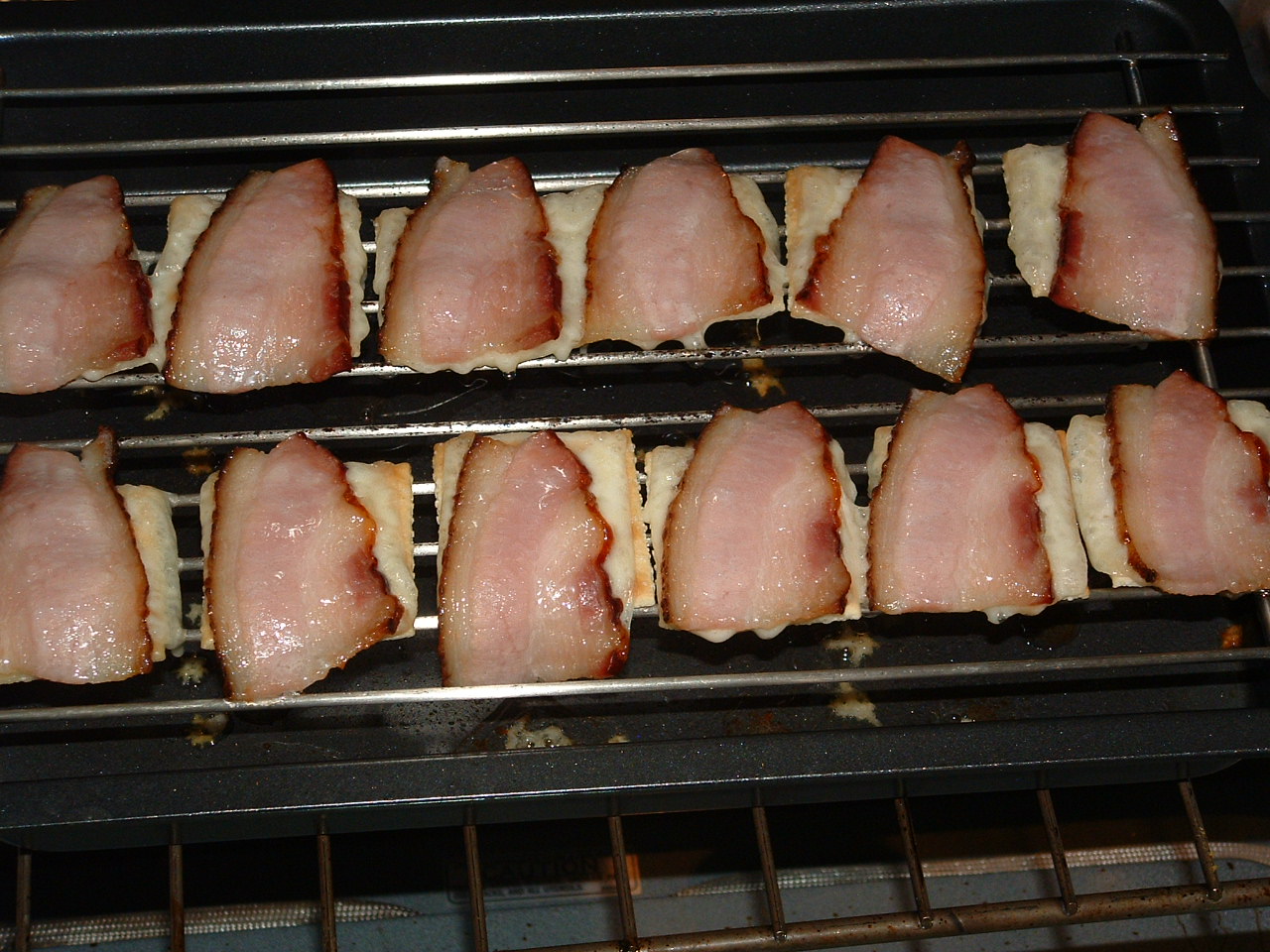
12 bacon strips, cut in half*
6 slices Havarti or aged white American cheese, cut into quarters
24 saltine crackers
  • Top each cracker with a slice of cheese.
  • Wrap each cracker with a half strip of bacon.
  • Place on a cookie rack over a shallow drip pan.
  • *Bake 12 to 15 minutes, turning once, at 400° F.
  • Serve hot.

*I used thick bacon today and quartered each slice.  Then I laid it just on top and I prefer this I think.  Thick bacon does alter the bacon time to 15-20 minutes. 

They were soooooooooooo easy and tasty too.  The crackers soften up and absorb the cheese and bacon flavors.  Let them cool just a bit and they are perfect!

    Good Cast Iron really makes the best non-stick pan… and SMOTHERED CHOPPED STEAKS taste best made in that pan.

    Remember when I promised you this product review? Well, it’s time and I have the perfect recipe for you too!

    I love shopping online with CSN and you can too.  It so easy and they have so many wonderful name brand products to choose from.  Whether you are looking for cheap bedroom furniture, lights, TV stands, dining room furniture or cookware  they have it all.  They sent me these awesome Emerilware cast iron pans to review.
    After a good seasoning, these pans are awesome and produce super tasty recipes!  My opinion?  CSN carries the highest of quality items and these pans are the proof in the pudding so to speak.  They are even heating and consistent.  CSN really ROCKS! I can’t think of an easier way to shop with reliable shipping, awesome communication and plain nice, accommodating people to work with!

    How to Season Cast Iron Cookware

    Cast iron lasts nearly forever if you take care of it. Seasoning cast iron cookware is necessary to ensure a non-stick surface and to prevent the pot or pan from rusting. If seasoned correctly your cookware can last a lifetime and more.

    1. For crusty cast ironware that you inherited or picked up at a garage sale: Your cookware may have some combination of rust and thick crackly black crud. It can be restored fairly easily to good as new condition! First place the cookware in a self-cleaning oven and run one cycle OR place in a campfire or directly on a hot charcoal fire for 1/2 hour, until dull red. The crust will be flaking, falling and turning to white ash. Then, after allowing to cool a bit to avoid cracking your cast iron,use the following steps. If you have more rust than crust, try using steel wool to sand it off.
    2. Wash your cast iron cookware with warm water and soap using a scouring pad. If you have purchased your cast iron cookware as new then it will be coated in oil or a similar coating to prevent rust. This will need to be removed before seasoning so this step is essential.
    3. Dry the cookware thoroughly, it helps to put the pan in the oven for a few minutes to make sure it’s really dry. Oil needs to be able to soak into the metal for a good seasoning and oil and water don’t mix.
    4. Coat the pot or pan inside and out with lard, Crisco, bacon fat, or corn oil. Ensure that the lid is also coated.
    5. Place both the lid and the pot or pan upside down in your oven at 300F for at least an hour to bake on a “seasoning” that protects the pan from rust and provides a stick-resistant surface.
    6. For best results repeat steps three, four and five.
    7. Ongoing care: Every time you wash your pan, you must season it. Place it on the stove and pour in about 3/4 tsp. corn oil or other cooking fat. Wad up a paper towel and spread the oil across the cooking surface, any bare iron surfaces, and the bottom of the pan. Turn on the burner and heat until smoke starts to appear. Cover pan and turn heat off.

    Alternate Method

    1. First, if you find your cast iron needs to be stripped down and re-seasoned do not fear. All you have to do is place the utensil in your Self Cleaning Oven on the shortest cleaning cycle (usually 3 hrs. on most models), and it will come out looking like the day it came out of the mold. Allow it to cool overnight. Wash the residue off with WATER ONLY in the sink using a stiff abrasive pad. Make certain NO DISH SOAP comes in contact with the utensil during this procedure. If it does you will have to start over!!! Dry the cast iron utensil off with a paper towel, and IMMEDIATELY place BACK in the oven at 350 degrees Fahrenheit for 10 minutes or so.
    2. Next, take the utensil out of the oven after the 10 minute drying time is complete, and lightly brush the utensil with a paper towel coated with Crisco or other solid cooking oil. Liquid vegetable oil will do in a pinch, but it’s better to save the liquids until AFTER your initial seasoning. It is important in this step only to lightly coat the cast iron with a light, thin coat of oil until it only glistens. Do not allow any puddles or pools of liquid as this will cause problems at a later time.
    3. Then, place the Cast Iron in the oven set to 500 to 550 degrees Fahrenheit with the COOKING SIDE FACING THE BOTTOM OF THE OVEN. This allows for any excess oil to drain off to the sides, and prevents pooling during the seasoning process. The higher heating temps allows for the oil to truly ‘cook’ as it should as opposed to just ‘gumming up’ at lower temps. Cook undisturbed for 1 hour.
    Please note: During the previous step it will be best to turn off any smoke alarms in the immediate area as it may smoke quite a lot. Ceiling fans also aid in ventilation.

    Finally, after your cast iron is finished seasoning for 1 hour or so, take it out of the oven and IMMEDIATELY wipe it down with another extra – light coat of Crisco. Allow it to completely cool.TIPS

    • If food burns, just heat a little water in the pan, and scrape with a flat metal spatula. It may mean that re-seasoning is necessary.
    • If you’re washing the cast iron too aggressively (for instance with a scouring pad), you will regularly scrub off the seasoning. Wash more gently or repeat oven-seasoning method regularly.
    • If your pan develops a thick crust, you’re not washing it aggressively enough. Follow “crusty pan” instructions.
    • If storing your Cast Iron Dutch oven for any length of time, it is always best to place one or two paper towels in between the lid and the oven to allow for air flow.
    • Also, after cleaning after each use it is always best to place it back in the oven on 350 degrees for 10 minutes or so to ensure all water has vaporized and left the surface of the cast iron.
    WARNINGS
    •  Do not cook tomatoes and other acidic foods in your cast iron cookware unless it has been well seasoned.
    •  Washing pans with detergent after they have been seasoned will break down the seasoning. Either wash without detergent (if you’re cooking similar foods with the pan, this is fine) or repeatedly oven-season your cookware.

    SMOTHERED CHOPPED STEAKS

    2 pounds ground sirloin
    1 sleeve Keebler club crackers, crushed
    1/2 teaspoon sea salt
    1/2 teaspoon white pepper
    1 tablespoon Worcestershire sauce
    1/2 cup finely chopped onion
    2 Jumbo eggs
    1 tablespoon liquid Smoke – MYSTERY ingredient
    3 tablespoons butter
    2 cloves garlic, minced
    1 large heirloom tomato, chopped,
    1 large Vidalia onion, sliced thin
    large shred cheddar cheese
    • Combine all the hamburger steak ingredients until well mixed. Form six steaks.
    • In a well seasoned cast iron grill, sear steaks on both sides.  About 4-5 minutes each side should leave you with medium steaks.
    • In a large skillet melt the butter. Saute the onions and garlic until fragrant and caramelized.
    • Top steaks with onions, tomatoes and cheese.

    Fire Day Friday: Steak Fajitas

    Wow, there are only 6 days of Summer left. By the time the next Fire Day Friday post rolls around Summer will be history. As gorgeous as East Tennessee and the Great Smoky Mountains are when Fall arrives, I still hate to hear that Summer is trying to make its walk of shame out of the door.

    So to grab that last gasp of Summer, I grilled one of my favorite dishes, steak fajitas.

    Steak Fajita Marinade
    Source: Nibble Me This

    1/4 cup Oil
    1/4 cup Lime Juice
    1/4 cup Tequila
    1-2 clove Garlic minced
    1 1/2 teaspoon Season salt
    1 1/2 teaspoon Oregano (I like using the dried oregano from our garden for more rustic texture)
    1 1/2 teaspoon Cumin (McCormick’s new roasted cumin is awesome)
    1/2 teaspoon Chili powder
    1/2 teaspoon Paprika
    1/2 teaspoon Red pepper flakes

    1.5 lb flat iron steak, flank steak, or skirt steak
    1 ea red bell pepper sliced
    1 ea green bell pepper sliced
    1 ea red onion sliced

    flour tortillas, shredded cheese, diced tomato, and other toppings

    Whisk together all marinade ingredients. Reserve 2-3 Tbsp of the marinade. Use the rest to marinade the steak and veggies for 1-2 hours.

    Grill the steak over direct heat at 500f for 4-6 minutes per side. For fajitas, I am looking for an internal temp of 125f. This gives you a crispy seared outside with a medium rare inside after a 10 minute rest.

    Add the veggies to a griddle for during the last two minutes.

    As mentioned, let the steak rest for 10 minutes before slicing. It is better to rest your steaks off of a plate because that lets the pores of the meat close and minimize loss of juices. I normally do that on a resting rack but I tried a new trick this time. I rested the steak on top of the grill veggies. That keeps them warm, bastes them with flavor, and raises the steak all at the same time. Win-win-win.

    Wrap 6 flour tortillas in foil and grill for 1 minute a side.

    Slice the steak and serve with the veggies, cheese and toppings.

    Do you have a favorite “Summer” dish that you are dying to have before Fall arrives next week?

    BLANCO ROSA POLLO PASTA

    BLANCO ROSA PASTA
     ¾ pounds penne pasta (I used lingiuini tonight)
    1 pound chicken, cubed
    3 Tablespoons Butter
    3 Tablespoons Olive Oil 
    1 small Vidalia Onion, chopped
    2 cloves garlic, minced  
    ½ cup White Zinfandel Wine*
    1 8 ounce can Contadina tomato sauce
    1 cup heavy whipping cream  
    Fresh parsley, chopped
    Fresh basil, chopped
    Salt and pepper to taste
    Asiago Parmesan cheese, grated

    • Cook the penne pasta until al dente per package instructions.
    • Heat 1 tablespoon each of butter and olive oil in a skillet. 
    • Add the chicken and saute until just done. Do not overcook them. 
    • Remove from heat and let cool for a few minutes.
    • In a large skillet heat the remaining butter and olive oil. Add the garlic and onion sauteing until translucent and fragrant, stirring occasionally. 
    • Add the wine. Let the wine evaporate for a few minutes, stirring occasionally.
    • Add the can of tomato sauce. Stir until well combined. 
    • Add heavy cream. Continue stirring until well blended. 
    • Lower heat to a simmer.
    • Add chicken pieces back in and heat through.
    • Toss with prepared pasta.
    • Top with basil, parsley and grate Parmesan cheese.

    *Can substitute chicken broth if you prefer.
    aprons 3

    CHEESEY AU GRATIN POTATOES

    • 1/2 cup butter
    • 16 oz. whipping cream
    • 5 large russet potatoes
    • 1 teaspoon salt
    • 1/2 teaspoon paprika
    • 1/2 teaspoon Dijon mustard
    • 1/2 teaspoon white pepper
    • 1 teaspoon minced garlic (jar) or 1 clove, mashed
    • 2 cups grated 4 white cheese mix (Gruyere, Muenster, etc…)
    • 2 cups rates sharp cheddar
    • Wondra Flour
    1. Preheat oven to 350 degrees.
    2. Peel and thinly slice potatoes.
    3. Grease 9×13 baking dish.
    4. In a large sauce pan, melt the butter.
    5. Gradually add the whipping cream and spices. Blend well.
    6. Gradually add the flour until the mixture thickens, but it is still pourable!
    7. Mix the cheeses all together.
    8. Layer the potatoes, cheese and cream mixture ending with cheese on top.
    9. Bake 45 minutes or until potatoes are tender and golden brown.

    I developed this recipe for a request from our youngest and it quickly became a family favorite.
     aprons 3

    BUTTERMILK WAFFLES – SIMPLY SWEET

    Buttermilk Waffles
    Makes 8-12 waffles
    2 cups all-purpose flour
    2 tablespoons white cornmeal
    1 teaspoon salt
    1/2 teaspoon baking soda
    1/2 teaspoon baking powder
    1 teaspoon vanilla
    Scant 2 cups buttermilk
    4 tablespoons salted butter, melted and cooled
    2 large eggs, separated
    Pinch cream of tartar

    • Heat the waffle iron according to the manufacturer’s instructions.  Adjust an oven rack to the middle position and heat the oven to 200 degrees.  Set a wire rack over a baking sheet and set aside.
    • Meanwhile, whisk the flour, cornmeal, salt, baking powder and baking soda together in a large bowl.  
    • In a medium bowl, whisk the buttermilk, melted butter, and egg yolks together.  
    • In a small bowl whip the egg whites and cream of tartar together until foamy.
    • Make a well in the center of the flour mixture, pour the buttermilk mixture into the well, and gently whisk together until just incorporated with a few lump remaining (do not overmix).
    • Fold in the whipped whites using a rubber spatula until just combined with very few strokes.
    • Spoon batter onto the waffle iron and cook until golden brown, about 3 1/2 minutes.  Transfer the waffles to the wire rack (don’t overlap), cover with a cheesecloth towel, and keep warm in the oven.
    • Repeat with the remaining batter.  Before serving, remove the towel and let the waffles crisp in the oven, about 3 minutes.

    aprons 3