


Emulsification is the process of combining two otherwise immiscible liquids together. Immiscible liquids are those that are incapable of being mixed or blended together without adding an emulsifier, liquids that won’t stay mixed on their own without quickly separating into 2 layers. But, add an emulsifier and a good whisk to create the force to break apart oil and disperse it into the water molecules and they’ll be thick as thieves. The emulsifier prevents the oils particles from rejoining.
But, be careful! Agitation, time and even temperature can make or break your emulsion. This is exactly why it’s SUPER important to add your oil in a VERY slow, thin stream when whisking so that the oil can be agitated JUST enough and incorporated evenly into the vinegar component.
Emulsions can become lumpy or thin at high temperatures or your butter sauces may break from too much heat when the butter fats separate.
Everyone knows that oil and water don’t mix, at least not by themselves. BUT, if you break them apart into LOTS of tiny droplets you CAN force them into a thick emulsion known as an aioli, vinaigrette or sauces such as Hollandaise.
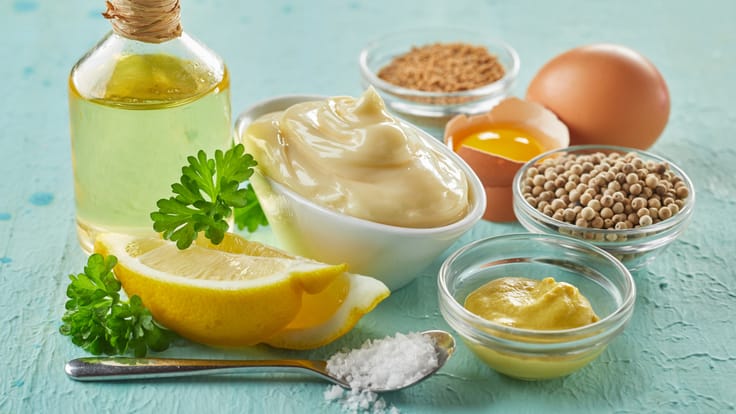
Emulsifiers are the “mediators or peace keepers” and are primarily proteins such as the humble egg yolk which is a natural lecithin and one of the most common, liquid lecithin which is generally derived from soybean or sunflower oil or even mustard, all of which are “middle of the road” (not too water repelling AND not too oil repelling) molecules that coat oil droplets, preventing them from separating. These agents act as “mediators”, reducing the surface tension and creating a protective barrier around dispersed droplets to prevent them from re-joining.
Emulsification is essential for creating stable food products, pharmaceutical lotions as well as biological digestion.
Stability depends on the force applied and the strength of the emulsifier. Emulsification transforms oily, separated liquids into thick, creamy and “stable,” mixtures. Vinaigrettes typically are only temporary emulsions and require shaking to re-mix for each application. Add that humble egg and you now have a stable “vinaigrette” like mayonnaise.
Emulsification is important in food preparation, but also in many other products like creams, lotions and ointments.
There are two primary types of emulsifiers are:
- Oil-in-water where oil droplets are suspended in water such as milk, mayonnaise, vinaigrettes, sauces and ice creams.
- Water-in-oil where water droplets are suspended in oil such as butters and margarines.
Mustard, bottled mayonnaise and honeys are easily accessible emulsifying agents that can be whisked into vinaigrette for a smooth salad dressing and easily found in most pantries. Other, but lesser known emulsifiers include tomato paste and garlic paste also create a rich, creamy emulsion of garlic and oil.