Cream Soda Chocolate Toffee Cupcakes


Save Room for Dessert is hosted by Joy at OuR KrAzY KiTcHeN
Vintage Recipe Thursday is hosted by Joy at Joy of Desserts
hosted by Kristen at OuR KrAzY KiTcHeN

CREAM SODA CHOCOLATE TOFFEE CUPCAKES with MOCHA SOUR CREAM FROSTING
2 cups cake flour
1 1/2 teaspoons baking powder
1/2 teaspoon baking soda
1/2 cup salted butter, softened
3/4 cup white sugar
1/4 cup packed brown sugar
1 tablespoon Hershey’s cocoa
1 teaspoon cinnamon
1/2 teaspoon nutmeg
3 JUMBO eggs, Beaten
1 tablespoon Grandma’s molasses
1/2 cup buttermilk
1/2 cup IBC cream soda*
3/4 cup Heath Bar toffee chips

  • Sift together the flour, baking soda, baking powder, cinnamon, sugar and brown sugar.
  • Whisk together the eggs, buttermilk and molasses.
  • In a large bowl beat together the softened butter and cream soda.
  • Add in the egg mixture and beat until smooth.
  • Gradually add in the flour mixture and continue to beat until even consistency.
  • Fill cupcake tins 2/3 full.
  • Bake 20 minutes or until tops spring back when touched.
  • Cool completely.
  • Frost and Enjoy!

MOCHA SOUR CREAM FROSTING
1/2 cup butter, softened
3 tablespoons sour cream
1/2 teaspoon PURE vanilla
3 tablespoons Hershey’s cocoa
2 cups powdered sugar

  • Beat butter until smooth.
  • Add vanilla and sour cream.
  • Add powdered sugar and cocoa and beat until smooth.
  • Frost and enjoy!

*also good with root beer

Would you like to be a guest host at Our Krazy Kitchen? We are selecting guest hosts for our new Thursday meme Guess Who’s Coming for Dinner. If you have a good recipe to share let me know!

wildatheart

Dieter’s Delight – Thousand Island Dressing

Quick Thousand Island Dressing

This is really yummy. More like McD’s special sauce & less like thick, gloopy bottled thousand island.

I also like it because there’s not high fructose corn syrup or any other crud.

*Bonus~each tablespoon is only 12 calories & I usually have most of these things on hand.

1/3 cup low-fat mayonaise
2 tablespoons ketchup
2 tablespoons fresh lemon juice (I used the kind in the bottle & it was fine)
2 tablespoons minced red bell pepper (tip, I chop & freeze these to use in recipes when I need them)
1 tablespoon minced onion1 tablespoon minced fresh parsley leaves (I did not have these, my dressing way yummy without them)
1 tablespoon sweet pickle relisha pinch of cayenne (or drop of Tabasco)
1/4 cup water.

Blend all ingredients until somewhat smooth in a blender or food processor, I used my Magic Bullet & it rocked.

Add up to 2 tablespoons of additional water if needed to thin dressing to desired consistency. Keeps in the fridge about 10 days.

Come on & share your great diet recipe with us!

Champagne Salad ~ Dieter’s Delight

CHAMPAGNE SALAD
1 large wedge romaine lettuce, torn into bite size pieces
2 Roma tomatoes, sliced
1 small avocado, sliced
2 kiwis, skinned and sliced
1 small red onion, chopped
1 orange peeled, segmented and halved again
1/3 cup peanut oil
3 tablespoons champagne vinegar
Juice of 1 lemon
3 tablespoons sugar
salt & pepper to taste

  • Whisk together peanut oil, champagne vinegar, lemon juice, sugar, salt & pepper. Chill for several hours.
  • Prepare veggies and toss well.
  • Drizzle salad all over and toss again.
  • Enjoy!


wildatheart

The Elephant in the Room…


Come on over to The Motivation Station to see how we’re dealing with the elephant.

When you google dementia this is what you get:
Dementia is a loss of brain function that occurs with certain diseases.

Symptoms ~ Problems may involve language, memory, perception, emotional behavior or personality, and cognitive skills (such as calculation, abstract thinking, or judgment). Dementia usually first appears as forgetfulness.

Symptoms include:
*Changed feeling (sensation) or perception
*Changed sleep patterns
*Change in sleep-wake cycle
*Insomnia
*Need for increased sleep
*Decrease in problem-solving skills and judgment
*Disorientation
*Confused about people, places, or times
*Unable to pick up cues from the environment
*Disorders of problem-solving or learning
*Trouble making calculations
*Unable to learn
*Unable to think abstractly
*Unable to think in general terms
* Impaired recognition (agnosia)
*Trouble recognizing familiar objects or people
*Trouble recognizing things through the senses
* Lack of or poor language ability (aphasia)
*Unable to form words
*Unable to name objects
*Unable to read or write
*Unable to repeat a phrase
*Unable to speak (without muscle paralysis)
*Unable to understand speech
*Have impaired language skills
*Repeat phrases
*Speak poorly (enunciation)
*Use slang or the wrong words
*Memory problems
*Unable to remember new things (short-term memory problems)
*Unable to remember the past (long-term memory problems)
*Motor system problems
*Gait changes
*Impaired skilled motor function (apraxia)
*Unable to copy geometric figures
*Unable to copy hand positions
*Unable to dress self ~ and lack of desire to bathe, brush teeth and the ability to live with those smells and without regard to those around them.
*Inappropriate movements
*Other motor system problems
* Seeing or hearing things that aren’t there (hallucinations) and having false ideas (delusions)
*Severe confusion
*Personality changes
*Anxiety
*Decreased ability to care for oneself
*Decreased interest in daily living activities ~ often accompanied by frequent “woe is me I’d be better off dead” drama scenes
*Depression
*Inappropriate mood or behavior ~ such as blurting out whatever they may be thinking without censure, often creating ambivalence in those around them.
*Irritability
*No mood (flat affect)
*Not flexible
*Only concerned with self (self-centered)
*Poor temper control
*Unable to function or interact in social or personal situations
*Unable to keep a job
*Unable to make decisions
*Withdrawal from social interaction
*Unable to be spontaneous
*Unable to concentrate

Other symptoms that may occur with dementia:
* Incontinence
* Swallowing problems

Treatment ~ The goal of treatment is to control the symptoms of dementia. Treatment depends on the condition causing the dementia. Some people may need to stay in the hospital for a short time.

Stopping or changing medications that make confusion worse may improve brain function. Medicines that contribute to confusion include:
* Anticholinergics
* Central nervous system depressants
* Cimetidine
* Lidocaine
* Painkillers (analgesics)

Treating conditions that can lead to confusion can often greatly improve mental functioning. Such conditions include:
* Anemia
* Decreased oxygen (hypoxia)
* Depression
* Heart failure
* Infections
* Nutritional disorders
* Thyroid disorders

Medications may be needed to control behavior problems. Possible medications include:
* Antipsychotics
* Cholinesterase inhibitors (donepezil, rivastigmine, galantamine) for Alzheimer’s-type dementia
* Dopamine blockers (haloperidol, risperdal, olanzapine, clozapine)
* Mood stabilizers (fluoxetine, imipramine, citalopram)
* Serotonin-affecting drugs (trazodone, buspirone)
* Stimulants (methylphenidate)

A person’s eyes and ears should be checked regularly. Hearing aids, glasses, or cataract surgery may be needed.

Psychotherapy or group therapy usually does not help because it may cause more confusion.

LONG-TERM TREATMENT:
A person with dementia may need monitoring and help at home or in an institution. Possible options include:
* Adult day care
* Boarding homes
* Convalescent homes
* In-home care

Family members can get help caring for the person with dementia from:
* Adult protective services
* Community resources
* Homemakers
* Visiting nurses or aides
* Volunteer services

In some communities, support groups may be available (see elder care – support group). Family counseling can help family members cope with home care.

Other tips for reducing disorientation:
* Have familiar objects and people around
* Keep lights on at night
* Provide environmental and other cues with reality orientation
* Reward appropriate behaviors and ignore inappropriate ones to control unacceptable or dangerous behaviors
* Stick to a simple activity schedule

Advance directives, power of attorney, and other legal actions may make it easier to decide about the care of the person with dementia. Seek legal advice early in the course of the disorder, before the person with dementia is unable to make such decisions.
Causes

The two major causes of non-reversible (degenerative) dementia are:

  • Alzheimer’s disease ~ Alzheimer’s disease is the most common form of dementia. Dementia is a term that is used to describe a group of brain disorders. These brain disorders cause memory loss and make it harder to carry out daily tasks. Alzheimer’s disease develops slowly over time. The symptoms begin to appear so gradually that it is often mistaken for normal aging.
  • Loss of brain function due to a series of small strokes (vascular dementia)

The two conditions often occur together.

Dementia with Lewy bodies (DLB) is a leading cause of dementia in elderly adults. People with this condition have abnormal protein structures in certain areas of the brain.

The structures and symptoms of DLB are similar to those of Alzheimer’s disease, but it is not clear whether DLB is a form of Alzheimer’s or a separate disease. There is no cure for DLB or Alzheimer’s.

Conditions that damage blood vessels or nerve structures of the brain can also lead to dementia.

Treatable causes of dementia include:
* Brain tumors
* Dementia due to metabolic causes
* Infections
* Low vitamin B12 levels
* Normal pressure hydrocephalus
* Thyroid conditions

Dementia usually occurs in older age. It is rare in people under age 60. The risk for dementia increases as a person gets older.

Tests & diagnosis
The following tests and procedures may be done:
* B12 level
* Blood ammonia levels
* Blood chemistry (chem-20)
* Blood gas analysis
* Cerebrospinal fluid (CSF) analysis
* Drug or alcohol levels (toxicology screen)
* Electroencephalograph (EEG)
* Glucose test
* Head CT
* Liver function tests
* Mental status test
* MRI of head
* Serum calcium
* Serum electrolytes
* Thyroid function tests
* Thyroid stimulating hormone level
* Urinalysis

Prognosis ~ Dementia usually gets worse and often decreases quality of life and lifespan.

Prevention ~ Most causes of dementia are not preventable.

You can reduce the risk of vascular dementia, which is caused by a series of small strokes, by quitting smoking and controlling high blood pressure and diabetes. Eating a low-fat diet and exercising regularly may also reduce the risk of vascular dementia.

Complications ~ Complications depend on the cause of the dementia, but may include the following:

* Abuse by an overstressed caregiver
* Increased infections anywhere in the body
* Loss of ability to function or care for self
* Loss of ability to interact
* Reduced life span
* Side effects of medications used to treat the disorder

When to contact a doctor:
* Call your health care provider if dementia develops or a sudden change in mental status occurs.
* Call your health care provider if the condition of a person with dementia gets worse.
* Call your health care provider if you are unable to care for a person with dementia at home.


wildatheart

THE ELEPHANT IN THE ROOM..

When you google dementia this is what you get:

Dementia is a loss of brain function that occurs with certain diseases.

Symptoms ~ Problems may involve language, memory, perception, emotional behavior or personality, and cognitive skills (such as calculation, abstract thinking, or judgment). Dementia usually first appears as forgetfulness.

Symptoms include:
*Changed feeling (sensation) or perception
*Changed sleep patterns
*Change in sleep-wake cycle
*Insomnia
*Need for increased sleep
*Decrease in problem-solving skills and judgment
*Disorientation
*Confused about people, places, or times
*Unable to pick up cues from the environment
*Disorders of problem-solving or learning
*Trouble making calculations
*Unable to learn
*Unable to think abstractly
*Unable to think in general terms
* Impaired recognition (agnosia)
*Trouble recognizing familiar objects or people
*Trouble recognizing things through the senses
* Lack of or poor language ability (aphasia)
*Unable to form words
*Unable to name objects
*Unable to read or write
*Unable to repeat a phrase
*Unable to speak (without muscle paralysis)
*Unable to understand speech
*Have impaired language skills
*Repeat phrases
*Speak poorly (enunciation)
*Use slang or the wrong words
*Memory problems
*Unable to remember new things (short-term memory problems)
*Unable to remember the past (long-term memory problems)
*Motor system problems
*Gait changes
*Impaired skilled motor function (apraxia)
*Unable to copy geometric figures
*Unable to copy hand positions
*Unable to dress self ~ and lack of desire to bathe, brush teeth and the ability to live with those smells and without regard to those around them.
*Inappropriate movements
*Other motor system problems
* Seeing or hearing things that aren’t there (hallucinations) and having false ideas (delusions)
*Severe confusion
*Personality changes
*Anxiety
*Decreased ability to care for oneself
*Decreased interest in daily living activities ~ often accompanied by frequent “woe is me I’d be better off dead” drama scenes
*Depression
*Inappropriate mood or behavior ~ such as blurting out whatever they may be thinking without censure, often creating ambivalence in those around them.
*Irritability
*No mood (flat affect)
*Not flexible
*Only concerned with self (self-centered)
*Poor temper control
*Unable to function or interact in social or personal situations
*Unable to keep a job
*Unable to make decisions
*Withdrawal from social interaction
*Unable to be spontaneous
*Unable to concentrate

Other symptoms that may occur with dementia:
* Incontinence
* Swallowing problems

Treatment ~ The goal of treatment is to control the symptoms of dementia. Treatment depends on the condition causing the dementia. Some people may need to stay in the hospital for a short time.

Stopping or changing medications that make confusion worse may improve brain function. Medicines that contribute to confusion include:
* Anticholinergics
* Central nervous system depressants
* Cimetidine
* Lidocaine
* Painkillers (analgesics)

Treating conditions that can lead to confusion can often greatly improve mental functioning. Such conditions include:
* Anemia
* Decreased oxygen (hypoxia)
* Depression
* Heart failure
* Infections
* Nutritional disorders
* Thyroid disorders

Medications may be needed to control behavior problems. Possible medications include:
* Antipsychotics
* Cholinesterase inhibitors (donepezil, rivastigmine, galantamine) for Alzheimer’s-type dementia
* Dopamine blockers (haloperidol, risperdal, olanzapine, clozapine)
* Mood stabilizers (fluoxetine, imipramine, citalopram)
* Serotonin-affecting drugs (trazodone, buspirone)
* Stimulants (methylphenidate)

A person’s eyes and ears should be checked regularly. Hearing aids, glasses, or cataract surgery may be needed.

Psychotherapy or group therapy usually does not help because it may cause more confusion.

LONG-TERM TREATMENT:
A person with dementia may need monitoring and help at home or in an institution. Possible options include:
* Adult day care
* Boarding homes
* Convalescent homes
* In-home care

Family members can get help caring for the person with dementia from:
* Adult protective services
* Community resources
* Homemakers
* Visiting nurses or aides
* Volunteer services

In some communities, support groups may be available (see elder care – support group). Family counseling can help family members cope with home care.

Other tips for reducing disorientation:
* Have familiar objects and people around
* Keep lights on at night
* Provide environmental and other cues with reality orientation
* Reward appropriate behaviors and ignore inappropriate ones to control unacceptable or dangerous behaviors
* Stick to a simple activity schedule

Advance directives, power of attorney, and other legal actions may make it easier to decide about the care of the person with dementia. Seek legal advice early in the course of the disorder, before the person with dementia is unable to make such decisions.
Causes

The two major causes of non-reversible (degenerative) dementia are:

  • Alzheimer’s disease ~ Alzheimer’s disease is the most common form of dementia. Dementia is a term that is used to describe a group of brain disorders. These brain disorders cause memory loss and make it harder to carry out daily tasks. Alzheimer’s disease develops slowly over time. The symptoms begin to appear so gradually that it is often mistaken for normal aging.
  • Loss of brain function due to a series of small strokes (vascular dementia)

The two conditions often occur together.

Dementia with Lewy bodies (DLB) is a leading cause of dementia in elderly adults. People with this condition have abnormal protein structures in certain areas of the brain.

The structures and symptoms of DLB are similar to those of Alzheimer’s disease, but it is not clear whether DLB is a form of Alzheimer’s or a separate disease. There is no cure for DLB or Alzheimer’s.

Conditions that damage blood vessels or nerve structures of the brain can also lead to dementia.

Treatable causes of dementia include:
* Brain tumors
* Dementia due to metabolic causes
* Infections
* Low vitamin B12 levels
* Normal pressure hydrocephalus
* Thyroid conditions

Dementia usually occurs in older age. It is rare in people under age 60. The risk for dementia increases as a person gets older.

Tests & diagnosis
The following tests and procedures may be done:
* B12 level
* Blood ammonia levels
* Blood chemistry (chem-20)
* Blood gas analysis
* Cerebrospinal fluid (CSF) analysis
* Drug or alcohol levels (toxicology screen)
* Electroencephalograph (EEG)
* Glucose test
* Head CT
* Liver function tests
* Mental status test
* MRI of head
* Serum calcium
* Serum electrolytes
* Thyroid function tests
* Thyroid stimulating hormone level
* Urinalysis

Prognosis ~ Dementia usually gets worse and often decreases quality of life and lifespan.

Prevention ~ Most causes of dementia are not preventable.

You can reduce the risk of vascular dementia, which is caused by a series of small strokes, by quitting smoking and controlling high blood pressure and diabetes. Eating a low-fat diet and exercising regularly may also reduce the risk of vascular dementia.
Complications ~ Complications depend on the cause of the dementia, but may include the following:

* Abuse by an overstressed caregiver
* Increased infections anywhere in the body
* Loss of ability to function or care for self
* Loss of ability to interact
* Reduced life span
* Side effects of medications used to treat the disorder

When to contact a doctor:
* Call your health care provider if dementia develops or a sudden change in mental status occurs.
* Call your health care provider if the condition of a person with dementia gets worse.
* Call your health care provider if you are unable to care for a person with dementia at home.

Menu Plan Monday


Menu Plan Monday hosted by Laura at I’m an Organizing Junkie


DATE
BREAKFAST
LUNCH
DINNER
MONDAY 11/9 CEREAL
SANDWICHES Tuna Melts
TUESDAY 11/10

TOAST
LEFTOVERS
Tomato Spaghetti Cups
WEDNESDAY 11/11
YOGURT
SOUP
Recipe Experiment Night
THURSDAY 11/12
FRUIT
CHEESE & FRUIT
French Onion Soup
FRIDAY 11/13
OATMEAL

C.O.R.N.

Polynesian Chicken Pasta Salad

SATURDAY 11/14
Shirred Eggs leftovers
Peach Pork Chops & Potatoes
SUNDAY 11/15
Huevos con Yummy Chicken Posole Stuffed Shells

wildatheart

Menu Plans for 3 Sides of Crazy


Menu Plan Monday hosted by Laura at I’m an Organizing Junkie


DATE
BREAKFAST
LUNCH
DINNER
MONDAY 11/9 CEREAL
SANDWICHES Tuna Melts
TUESDAY 11/10

TOAST
LEFTOVERS
Tomato Spaghetti Cups
WEDNESDAY 11/11
YOGURT
SOUP
Recipe Experiment Night
THURSDAY 11/12
FRUIT
CHEESE & FRUIT
French Onion Soup
FRIDAY 11/13
OATMEAL

C.O.R.N.

Polynesian Chicken Pasta Salad

SATURDAY 11/14
Shirred Eggs leftovers
Peach Pork Chops & Potatoes
SUNDAY 11/15
Huevos con Yummy Chicken Posole Stuffed Shells


Oven Barbecued Chicken ~ Simply Delicious Sunday

OVEN BARBECUED CHICKEN

2-3 pounds boneless chicken breasts
olive oil to coat pan well
3 tablespoons butter
1 small onion, chopped
1 cup ketchup
1/3 cup roasted garlic rice vinegar
4 tablespoons brown sugar
1 tablespoon Worcestershire sauce
1/2 teaspoon sea salt
1/2 teaspoon white pepper

  • Heat oil in a large skillet
  • Brown chicken on all sides
  • Transfer chicken to 9×13 olive oiled baking dish
  • In a saucepan melt the butter and saute the onion
  • Stir in the remaining the ingredients and simmer uncovered for 15 minutes
  • Pour the sauce mixture over the chicken
  • Bake at 350 degrees for 1 hour
  • Baste periodically
  • We like to use the excess sauce over a serving of rice and serve this with home made Potato Salad

Previously posted at 3 Sides of Crazy May 2008

San Antonio Chicken~ Simple Saturday with girlichef

This is a delicious Tex-Mex dish from my Gloria’s books The Foods and Flavors of San Antonio…with a few modifications. It’s very simple…yet packed with flavor…give it a try!San Antonio Chicken

From Foods & Flavors of San Antonio by Gloria Chadwickslightly adapted

2 skinless, boneless chicken breasts I actually used 3

1 1.25 oz. pkg. taco seasoning (or 1/4 c. of your own blend)

3 Tbs. water

2-3 Tbs. vegetable oil

1 medium onion, chopped coarsely

1 green bell pepper, coarsely chopped

1 c. frozen corn, thawed I used 1 can Mexican-style corn

1 2 oz. jar pimientos I omitted this

1 15 oz. can black beans, drained & rinsed

3 c. cooked white rice, hot

1 c. picante sauce I used 1/2 c.

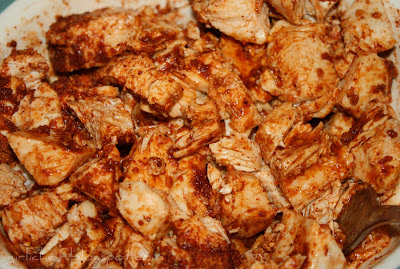
Place chicken in saucepan and cover with water. Let simmer slowly until cooked through. Let cool in broth (I think it makes the chicken more flavorful) until cook enough to handle. Then chop or pull apart and toss with taco seasoning and water. Set aside.

Heat the oil in a 12″ skillet over medium-high heat. Add onion, green bell pepper and corn. Saute until tender.

Add pimientos, black beans, reserved chicken .

Stir it up well. Allow all to heat through. Stir in picante sauce.

Gloria also mixes in the rice, but I decided I wanted to serve it over the rice. Garnish w/ your favorite toppings. I used sour cream, cilantro and shredded “Mexican Style” cheese & crumbled queso fresco. I also toasted up a flour tortilla to eat with it. DELICIOSO!*originally posted at girlichef